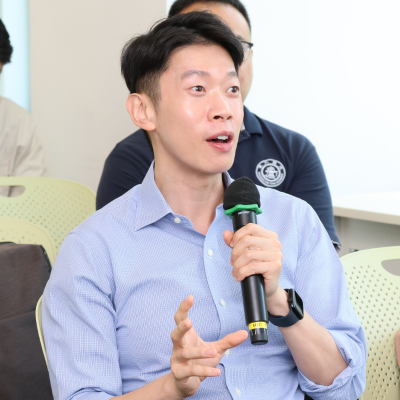
Professor Kwan Nok Chan
Associate Professor, Master of Public Administration (MPA) and Assistant Dean (Teaching & Learning), Faculty of Social Sciences
Staff Profile
Prof. Kwan Nok Chan researches the role of information in public policy. He combines classic theories of institutions in the public policy literature with notions of information processing from behavioral science and information theory to understand how communities organize themselves to overcome uncertainty, cognitive overload, attentional biases, and other informational inefficiencies to deliver effective governance.
A number of his past projects were concerned with information processing inside government bureaucracies. Drawing on an original dataset spanning decades of policymaking in Hong Kong and the Chinese mainland, these studies revisit assumptions prevalent in public policy theories of information processing and suggest modifications to improve their generalizability in comparative applications. More recently, his team has sought to further develop information processing theory, this time focusing on how policy information varies qualitatively across domains and how that variation, in turn, reshapes intra-governmental exchange. Recent publications and working papers include additional research on oversight and disclosure as policy tools to address informational challenges in environmental regulation and ESG.
Combining information processing with the Center’s long-term interest in the commons and collective action, his team investigates how institutional choice is associated with the quality of peer-produced content in online encyclopedias and other open-access communities, whose effective governance bears critically upon social and economic growth in the digital era. Another project compares the patterns of AI integration in public service among street-level bureaucrats in Shanghai, Taipei, and Seoul, where pre-existing information-processing arrangements are found to determine the scale and extent of AI integration in many important public service scenarios.