


Mui Tsz Lam and Kop Tong are two Hakka villages situated on the mid-hillsides of northeastern New Territories, Hong Kong. More than three centuries ago, Hakka settlers established communities within these mountain forests and developed a way of life rooted in coexistence with nature. However, as villagers gradually moved away during the mid-to-late twentieth century, houses were abandoned or collapsed, terraced fields reverted into forest, and the close interactions between people and nature slowly disappeared. Along with them, the diverse habitats shaped through this relationship also began to fade.
“Forest Village” is a long-term initiative dedicated to the restoration of local rural resources. Led by the Centre for Civil Society and Governance and co-organized by the Association for Sha Tau Kok Culture and Ecology, the project is developed in collaboration with villagers, partner organizations, and volunteers, and is supported by the Countryside Conservation Funding Scheme under the Countryside Conservation Office of the Hong Kong SAR Government.
“Forest Village” emphasizes that forests and villages should be understood as an inseparable whole, integrating the idea of human–nature coexistence into both conservation and revitalization. During Phase One (2021–2024), the project focused on restoring farmland, managing habitats, and rehabilitating Mui Tsz Lam and Kop Tong into a “Forest Village” — a settlement where the forest serves as the primary habitat, sustaining both natural and cultural landscapes.
Phase Two (2024–2027) draws inspiration from the concept of “community forestry” and puts into practice the idea of “village forestry.” The surrounding forests are regarded as shared resources belonging to both the village and wider society. The project encourages and cultivates the participation of villagers, volunteers, and diverse stakeholders — including non-profit organizations, scientists, architects, artists, and interested members of the public — in the collective stewardship and management of the forests.
The project aims not only to conserve and enhance the ecological value of forest habitats, but also to explore how these environments may provide more diverse ecosystem services. Ultimately, it seeks to rebuild sustainable relationships between people and nature through renewed interaction with the forest landscape.
The habitats encompassed within “Forest Village” include Feng Shui woods, secondary forests, food forests and orchards, streams flowing through and alongside woodland, terraced fields, and village settlements. Together, this interconnected system supports a wide range of functions, including ecological conservation, agricultural production, education, and recreation.
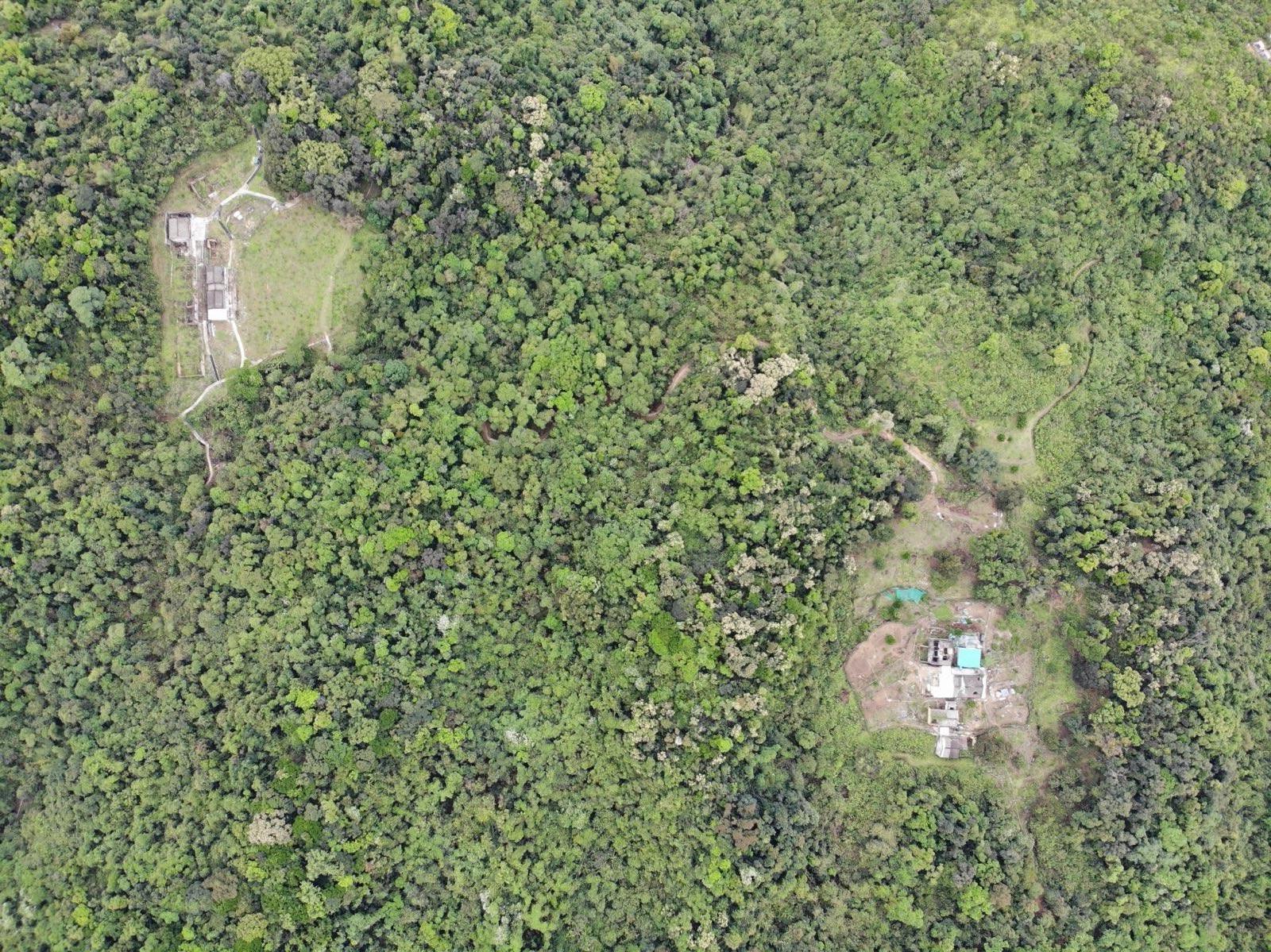
Mui Tsz Lam (left) and Kop Tong (right)


