Most Hakka people in Hong Kong migrated to the region after the Evacuation Order, around 1700–1750, when the Qing government recruited farmers to cultivate the lands of Xin’an County. At the time, the more fertile plains of the New Territories were already occupied by other communities, and many Hakka settlers therefore moved into the remote mountains and upland forests. Although life was harsh, they developed a way of living deeply rooted in the mountains. By making use of the abundant surrounding plant resources, they sustained everyday life through close interaction with the natural environment.
Plants played an important role in Hakka culture. They were used as food ingredients, medicines, and craft materials, and were also deeply embedded in festivals and other cultural practices.
Mui Tsz Lam was established before the Evacuation Order. According to village history, the ancestors of the Lok Tam Tsuen lineage, led by Tsang Yau Kung, migrated southward from Qingxi in Dongguan and eventually settled along the slopes of Tiu Tang Lung. Kop Tong, by contrast, was founded in 1775 after the lifting of the Evacuation Order. In terms of settlement history, the two villages are therefore unusual exceptions among Hong Kong’s Hakka communities.
Yet plants remained inseparable companions in village life. These are what we today refer to as “folklore plants” or “folk plants.” Through this folkloric perspective, a walk through Mui Tsz Lam and Kop Tong reveals that even the wild grasses covering the hillsides are part of a living cultural treasury.
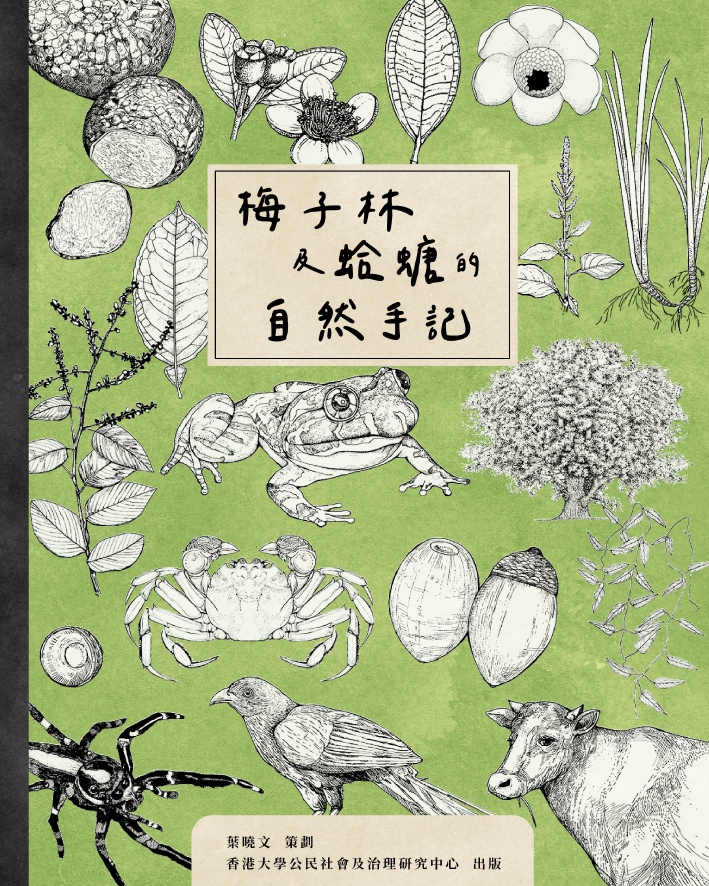
Nature Journal of Mui Tsz Lam and Kop Tong
We invited Human Ip to collaborate with us, dedicating three months to immerse in the villages, interview residents, and listen to their detailed accounts of past flora and fauna. These stories were documented through both writing and illustration. The results can be viewed in the e-book Nature Journal of Mui Tsz Lam and Kop Tong on the right. (Chinese only)