The village community hoped for a gathering place;
The campsite wished to enrich visitors’ experiences within the village;
Collapsed village houses and former construction works had left behind large quantities of building debris;
Meanwhile, urban areas were overwhelmed with surplus materials awaiting alternatives to landfill disposal.
Thereby, the “Circular Space” was born.
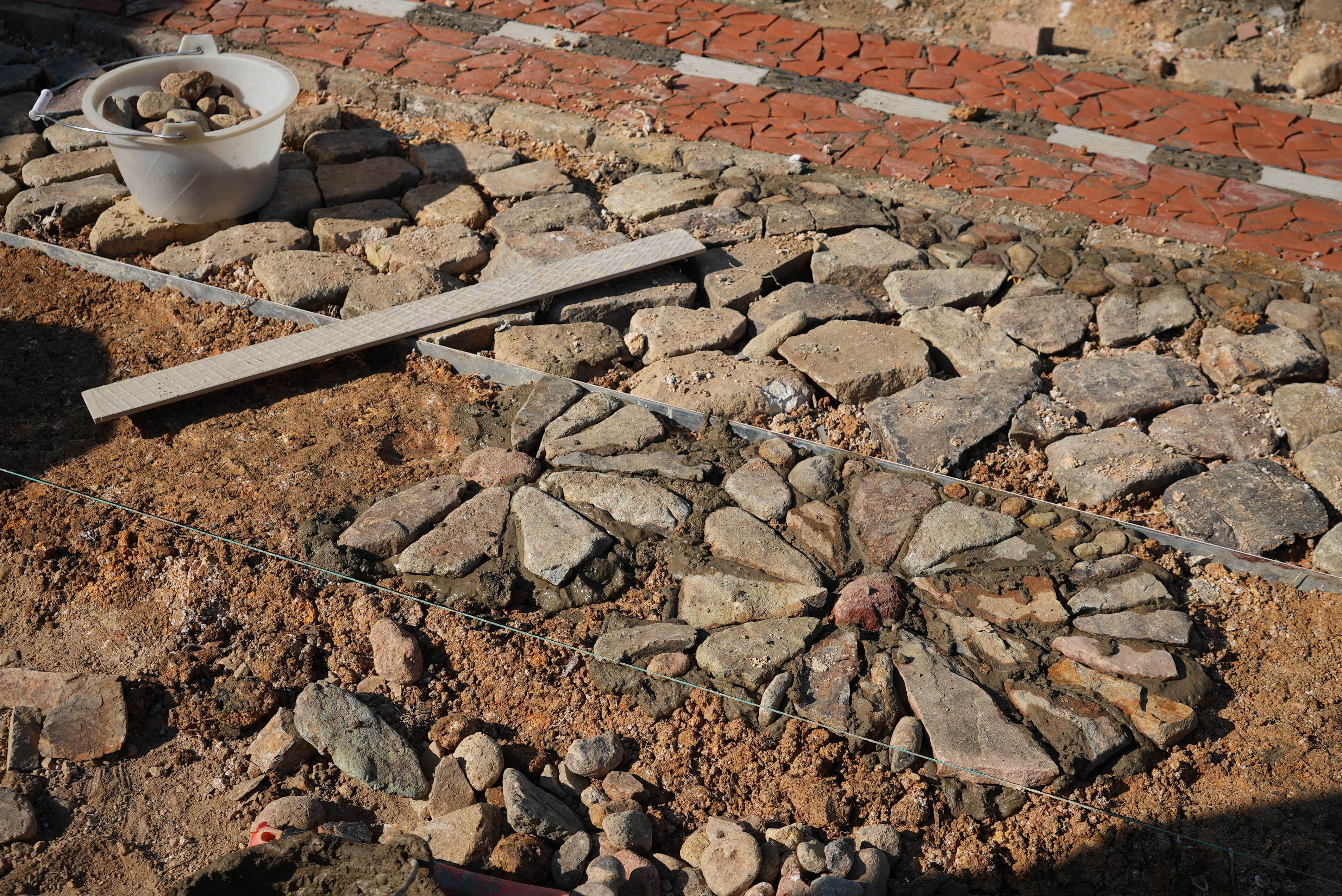
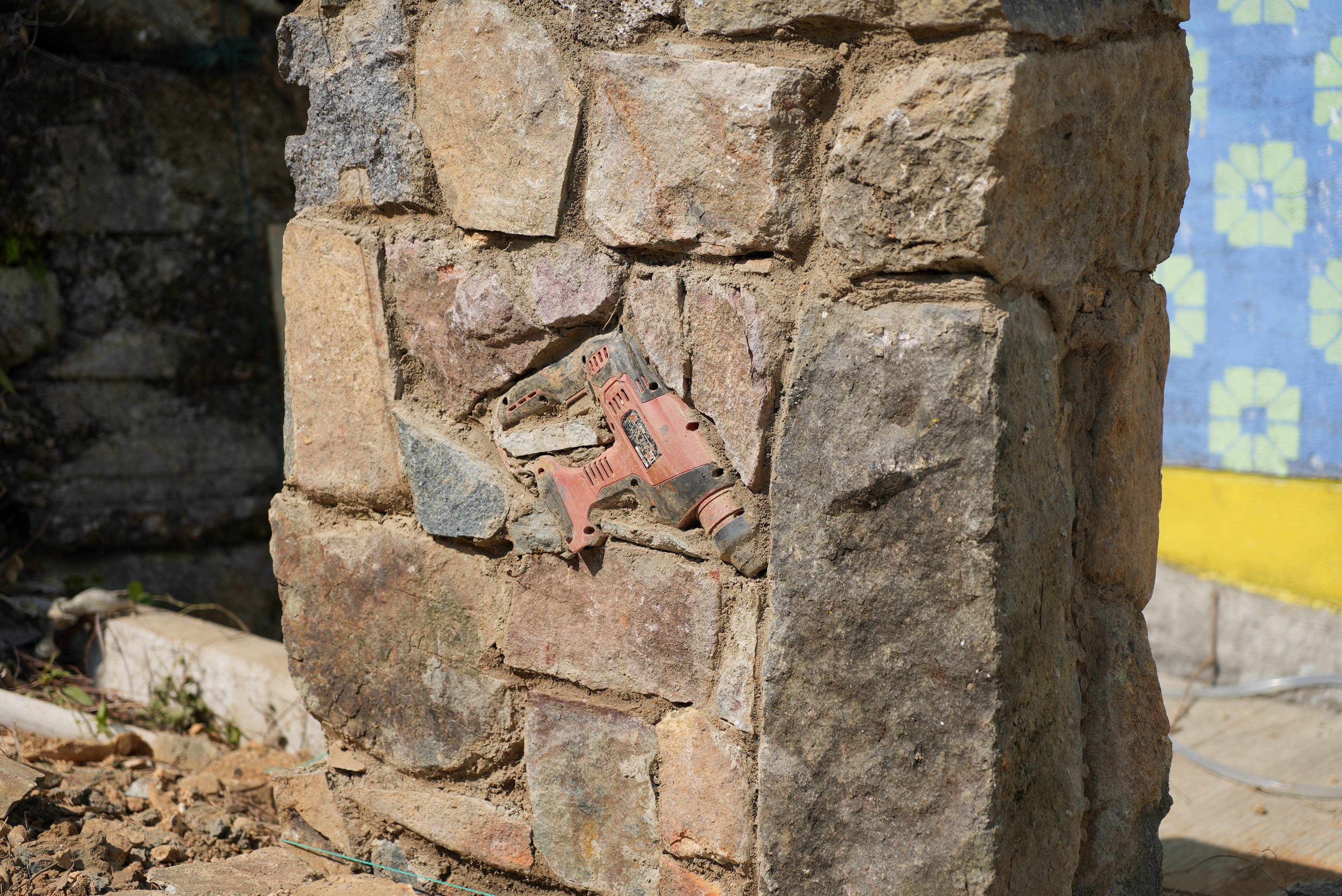
The project team collaborated with Assistant Professor Kuo Jze Yi and his architectural research team "Local Practice". Following principles of adapting to local conditions and using local materials, the team collected natural materials and construction debris from around the village, including stones of various colours, earth, roof tiles, wire mesh, and broken concrete fragments. On an uneven vacant site once used for dumping waste materials, these discarded elements were carefully recomposed into a newly designed ground surface that preserves traces of time while generating new forms of order and beauty.
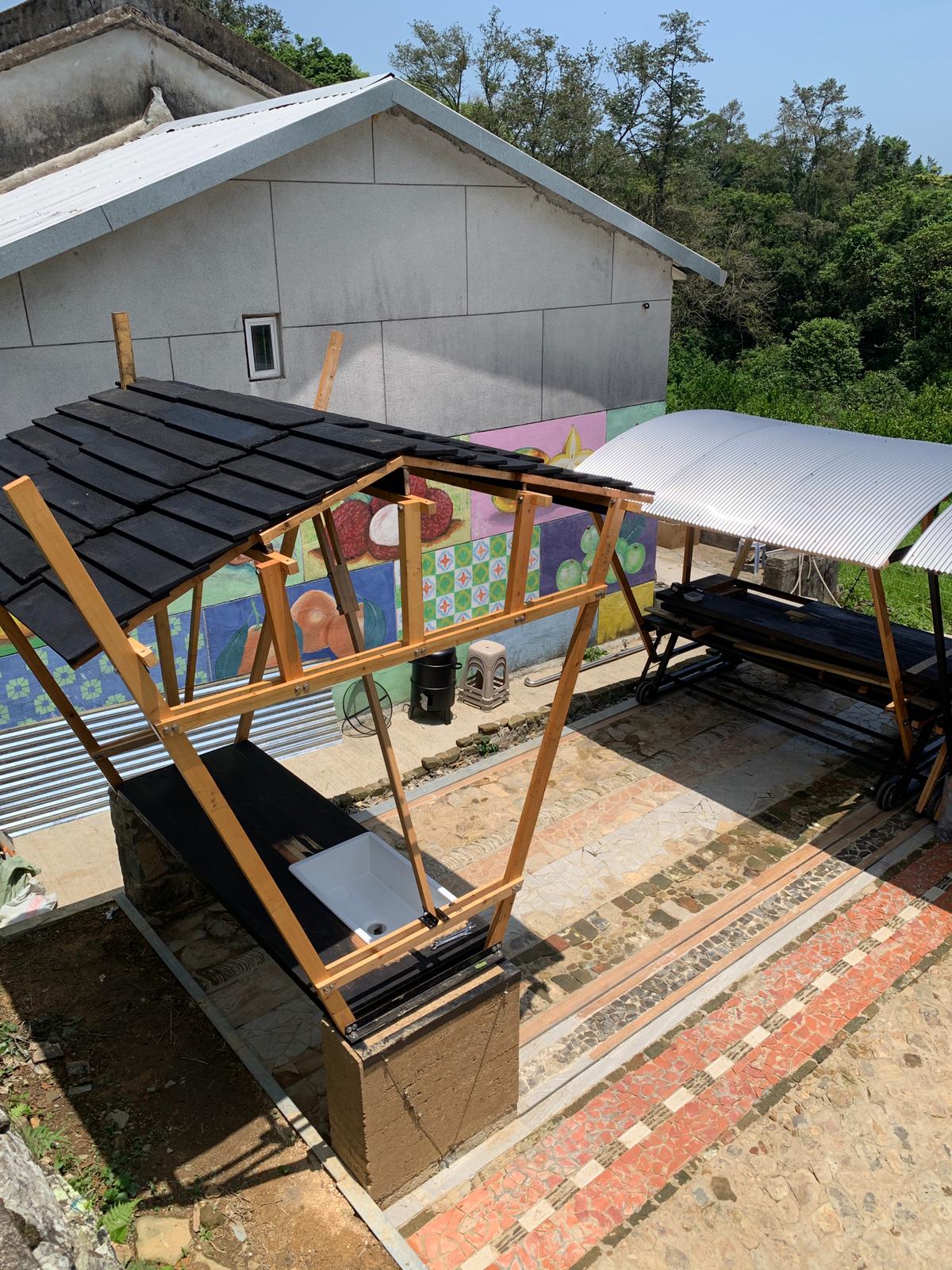
The team also recycled surplus materials from urban areas, such as timber boards and other reclaimed resources, upgrading and combining them with new materials before transporting them laboriously into Mui Tsz Lam. These materials were transformed into movable and foldable furniture, helping to create a shared community space for cooking, gatherings, and collective activities.
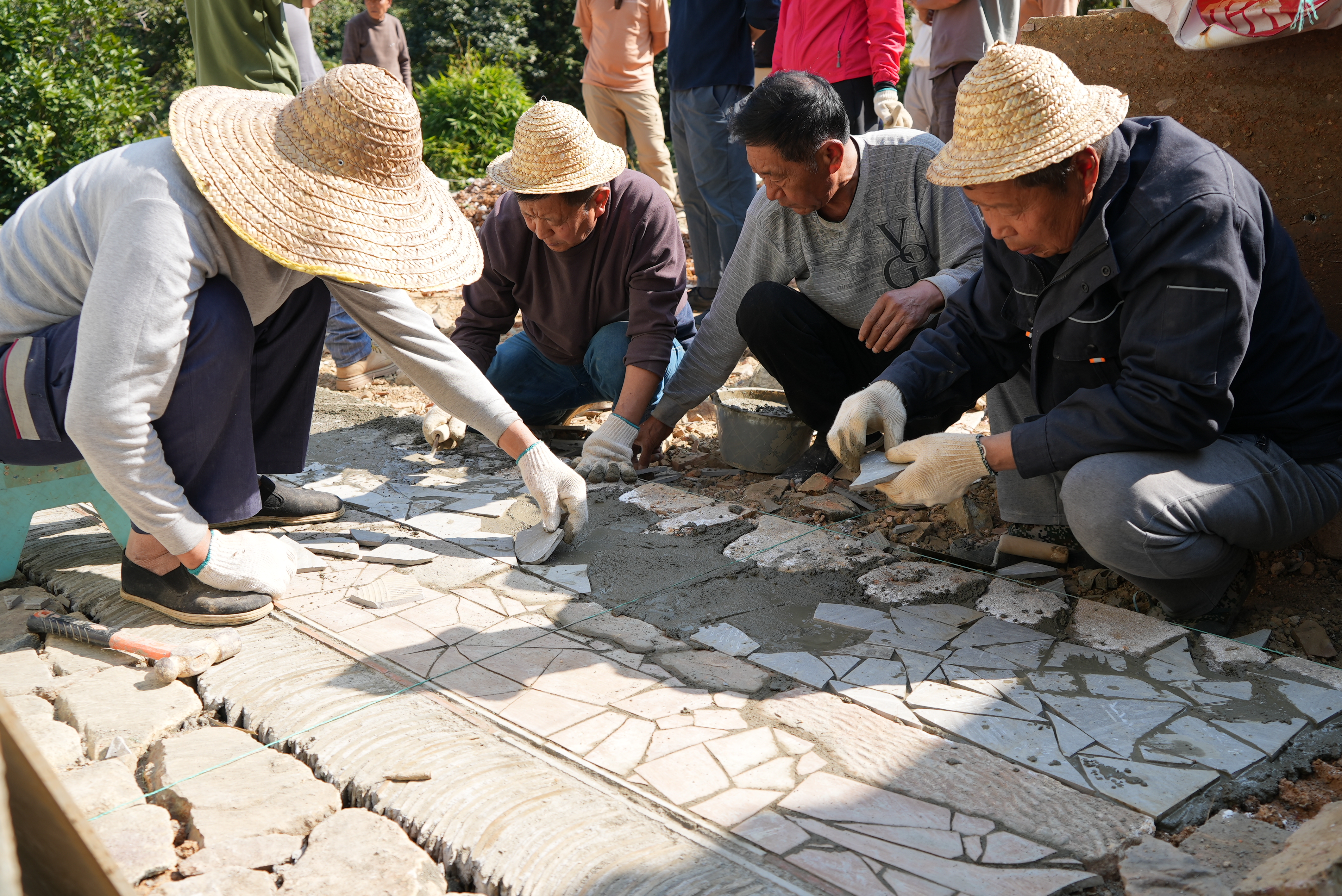
The project brought together a group of traditional craftsmen from Zhoushan Village in Henan Province — long-time collaborators of Professor Kuo for more than a decade — alongside young architects from Hong Kong and mainland China in an intergenerational collaboration. Through a participatory design process involving workshops, campsite managers, volunteers, and other stakeholders were invited to contribute directly to the design and construction process. The final space embodies the creativity and wisdom of all participants.
Here, materials are reused, craftsmanship is transmitted, experiences are exchanged, and people are connected. “Circular Space” is envisioned as a public space where resources, skills, and community relationships can continue to circulate and regenerate.