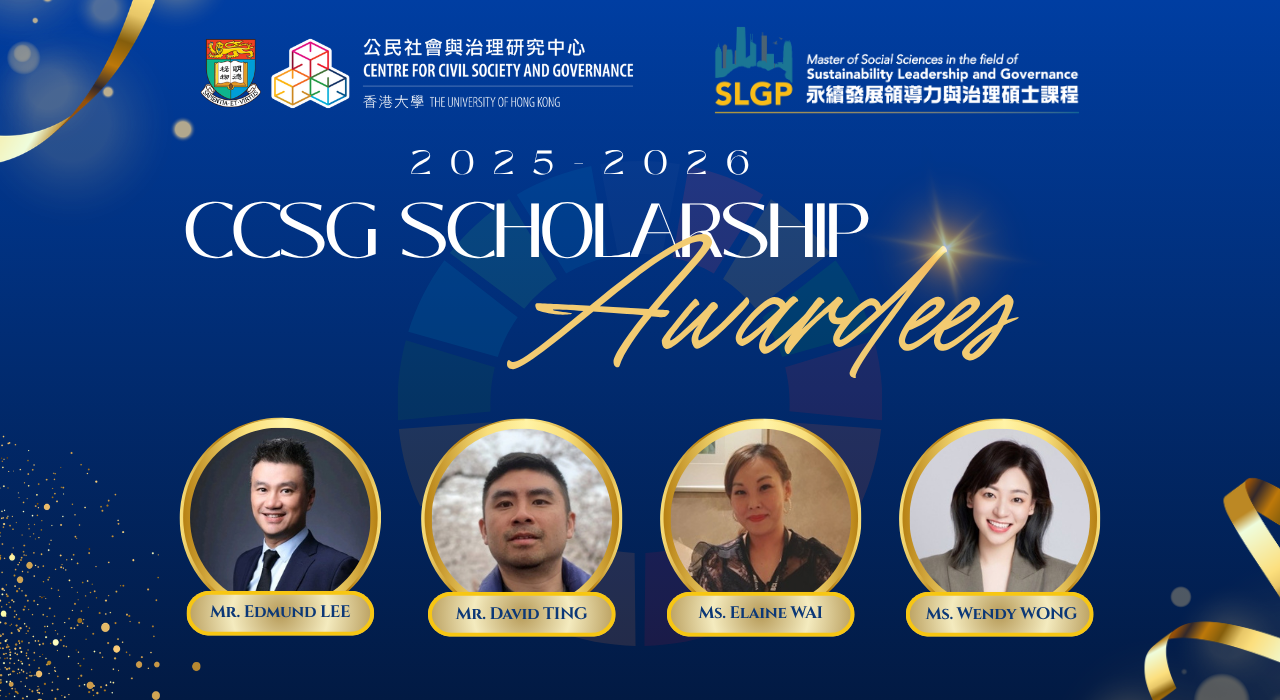
Celebrating Academic Excellence: 2025-26 CCSG Scholarship Awardees
As we celebrate this year’s graduating class from the Master of Social Sciences in Sustainability Leadership and Governance (SLG) Programme, we are thrilled to announce four exceptional students. In recognition of their remarkable academic excellence and dedication, they have been awarded the Centre for Civil Society and Governance Scholarship (CCSG Scholarship).
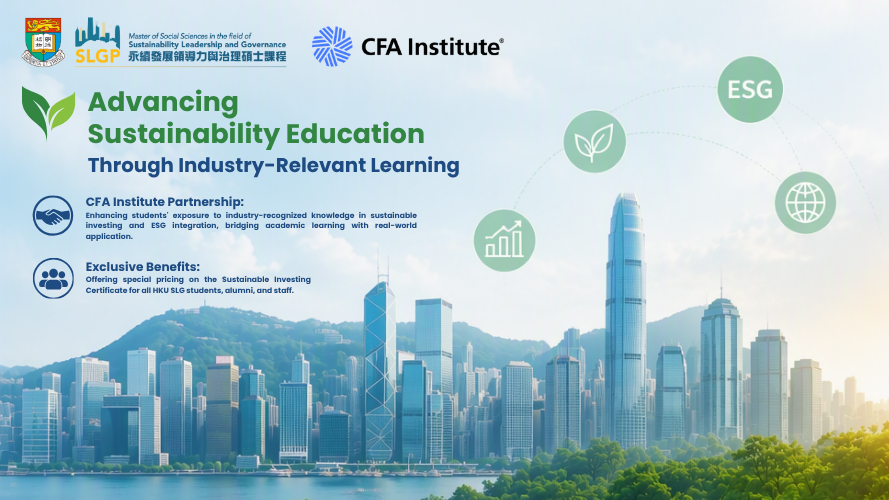
Advancing Sustainability Education Through Industry-Relevant Learning
As part of this commitment, we partner with CFA Institute to enhance students’ exposure to industry-recognized knowledge in sustainable investing and ESG integration — bridging academic learning with real-world application. HKU SLG students, alumni, and staff also enjoy special pricing on the Sustainable Investing Certificate.
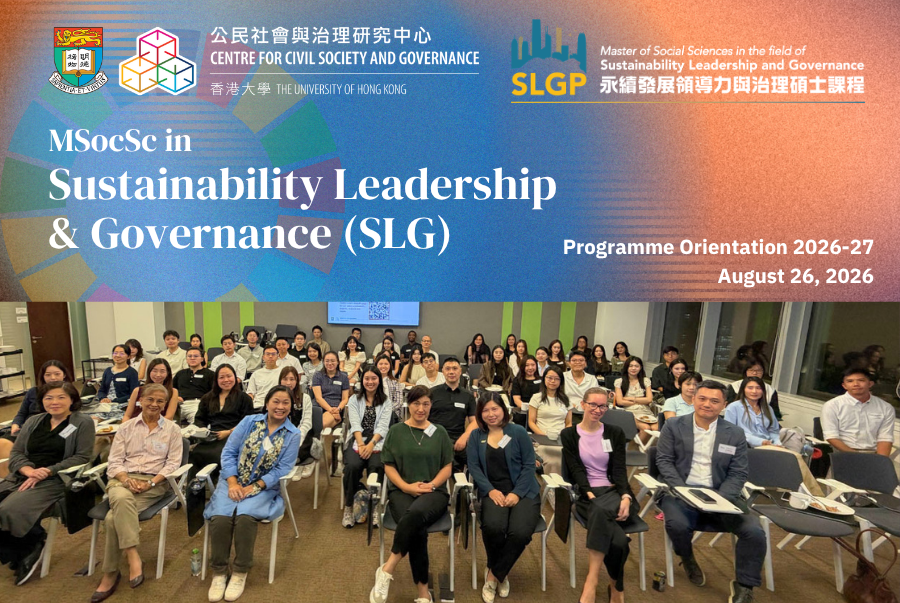
MSocSc in Sustainability Leadership & Governance (SLG) Orientation 2026-27
On August 26, 2026, the Centre for Civil Society and Governance welcomed the 2026-27 cohort of the MSocSc in Sustainability Leadership & Governance (SLG) programme
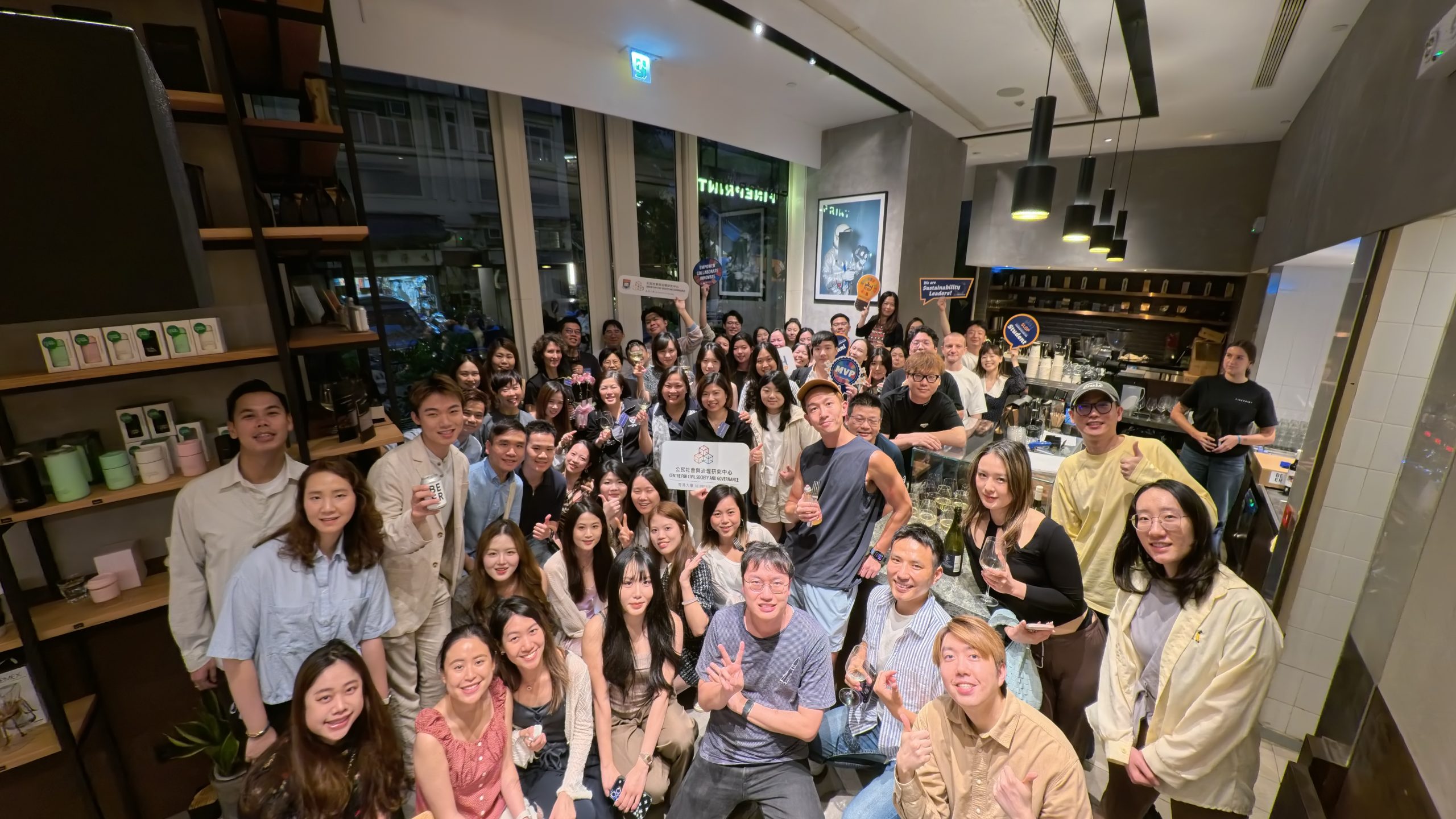
SLG Alumni & Students Mixer 2026-27
On May 9, 2026, alumni, current students, and teachers of the Master of Social Sciences in Sustainability Leadership and Governance (SLG) programme gathered to share experience and forge new connections, enjoying a wonderful evening dedicated to reconnecting and strengthening our SLG community.