Project Team: Professor Wai-Fung LAM, Dr. Winnie LAW, Ms. Katie CHICK, Mr, Tai HU, Ms. Daisy YEUNG, Dr, Jessica Marie WILLIAMS 

Background

Since 2007, MTR has been managing the 32-hectare Lok Ma Chau (LMC) Wetland to mitigate the ecological impacts of the construction and operation of the Sheung Shui-Lok Ma Chau Spur Line on the East Rail Line. Mitigation measures include habitat enhancement, routine management and regular ecological monitoring.  

Over the past two decades, a notable biodiversity gain has been observed. It provides habitat for globally threatened bird species, including the black-faced spoonbill (Platalea minor) and yellow-breasted bunting (Emberiza aureola).  With its comprehensive enhancement approach, the management of LMC Wetland has received recognition from environmental groups. Given its scale, accessible location, and diverse ecological value of the LMC Wetland, it reflects its significant potential to promoting sustainable development in Hong Kong. 

Since 2023, MTR Corporation has been collaborating with the Centre for Civil Society and Governance at The University of Hong Kong to further unlock the sustainability potential of the LMC Wetland. A wetland transformation strategy has been proposed, going beyond environmental management to create blended values that benefit the society at large.  

Vision 

The partnership aims to promote the holistic attainment of biodiversity enhancement, climate resilience, water security, social wellness, and a regenerative economy through Nature-based Solutions, Regenerative Production, and Social Innovation in the LMC Wetland. 

Nature-based Solution (NbS) 

Instead of relying mostly on engineering or technology, NbS harnesses the power of nature through utilising well-functioning ecosystems and the services they provide to address societal challenges. Our initiatives aimed at improving habitats by cultivating aquatic species at different trophic levels.  

Regenerative Production 

Regenerative Production is a set of production principles that actively restore habitats, increase biodiversity. We apply the regenerative production principle in agriculture or aquaculture to enhance various ecosystem services.  

Social Innovation 

Social innovation is about collaborating with the community and stakeholders on new ways to tackle societal challenges. It values local and traditional knowledge to ensure sustainable and community-centered outcomes. 

Integrated Multi-Trophic Agro-Aquacuulture (IMTAA) Prototype Model  

This initiative combines research, prototyping, monitoring, evaluation, and adaptive management to ensure long-term success. We customise an Integrated Multi-Trophic Agro-Aquaculture (IMTAA) model for the LMC Wetland, which incorporates aquaculture species (fish & shrimps) production with farming of low-trophic species (mussels) and primary producers (hydroponic crops, aquatic plants, and macroalgae).  

The system mimics nature’s way of recycling nutrients and creating a balanced environment for multiple species. The system helps restore aquatic ecosystem health, enhance circularity, and regenerate productivity, while meeting conservation objectives. 

Banner Image

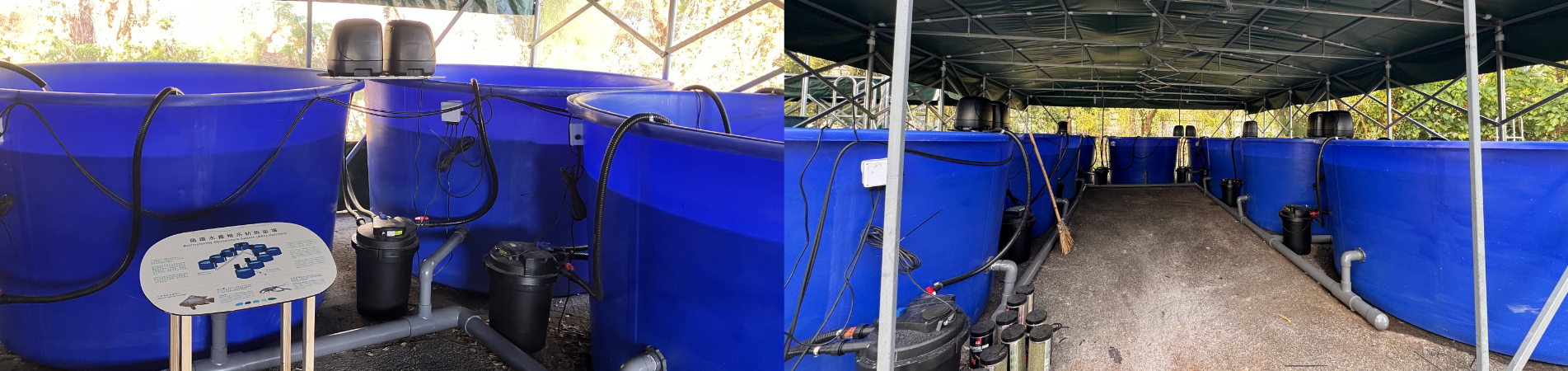
Utilizing the Recirculating Aquaculture Systems (RAS), the tanks are designed to provide a sheltered and controlled environment for the hatching and nursing of fish and shrimp fry, including Tilapia and Oriental River Prawn. These fry are subsequently used to restock fishponds within the LMC Wetland and serve as a food source for birds and other wildlife.  

Water drawn from the wetland is filtered, aerated and disinfected before returning to the tanks. The RAS offers key advantages such as minimizing water consumption and reducing eutrophication. Supported by a suite of appropriate technologies, we can remotely monitor water parameters, enabling swift and informed actions to optimize water conditions and enhance system performance. 
Banner Image

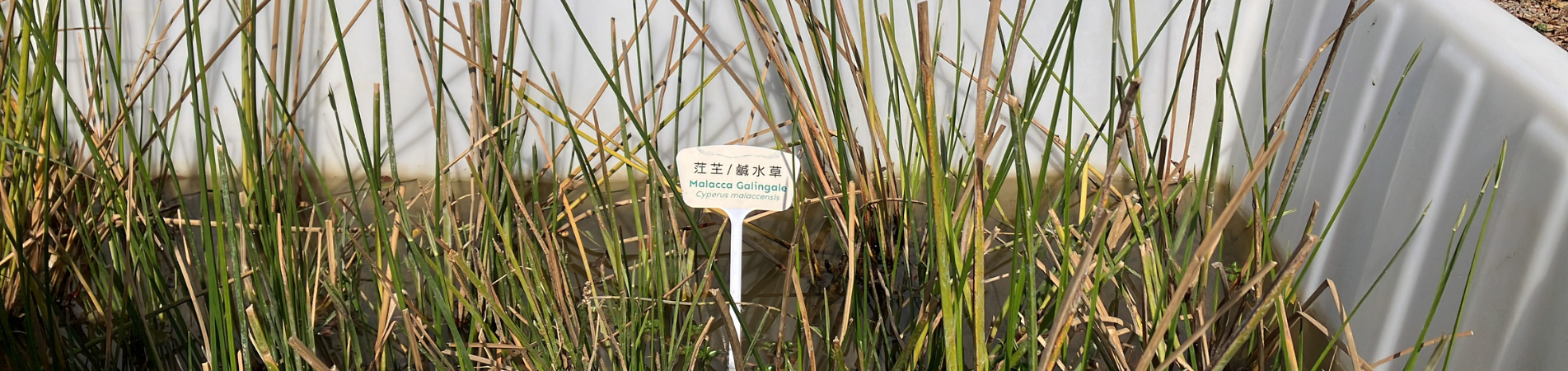
The nursery was established to provide a reliable source of local wetland plants to support habitat management at the LMC Wetland, with potential application to other managed wetlands. 

The nursery operates on an aquaponic design, which collects wastewater from the hatchery and transforms it into nutrient-rich water to support plant growth. Acting as a biofiltration system, the aquaponic setup harnesses the power of microorganisms and plants to absorb discharge generated from aquaculture, converting it into valuable biomass such as edible crops. To ensure optimal plant growth and ensure that the treated water is clean before release, the system is equipped with IoT-enabled sensors for real-time monitoring of water parameters.  

Banner Image

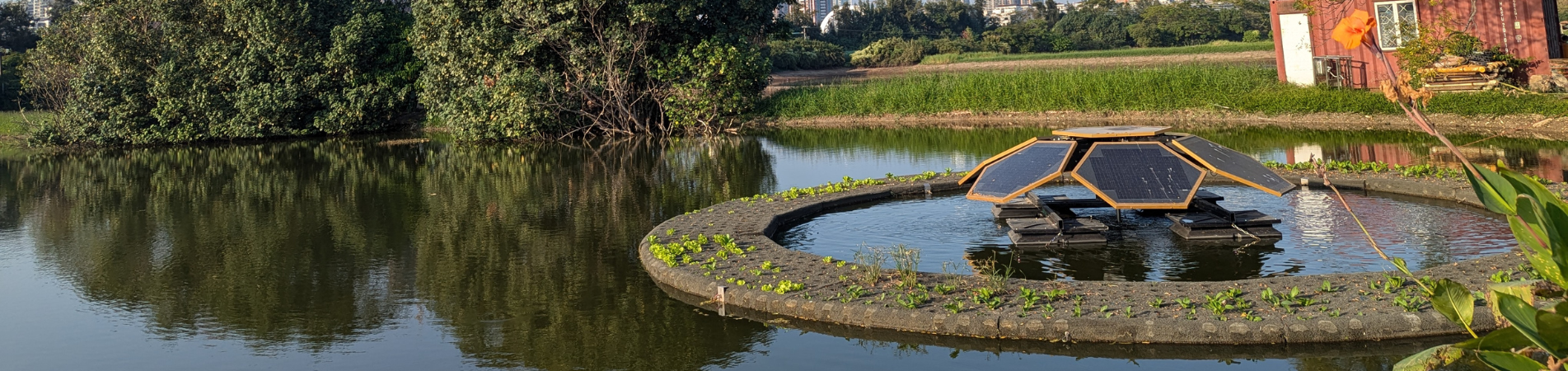
Different prototypes of constructed floating platforms that support wetland plants are deployed to offer the following ecosystem services, improving water quality, lowering water temperature, creatin new habitat, and offering environmental education opportunities.  

The modular design enables easy transportation, installation, and adaptation to various sizes and shapes, making replication at other locations highly feasible. The sturdy design also serves as an excellent foundation for anchoring smart devices such as solar panels, aerators, water sensors, and infrared cameras —enhancing the efficiency and effectiveness of wetland management. 
Banner Image

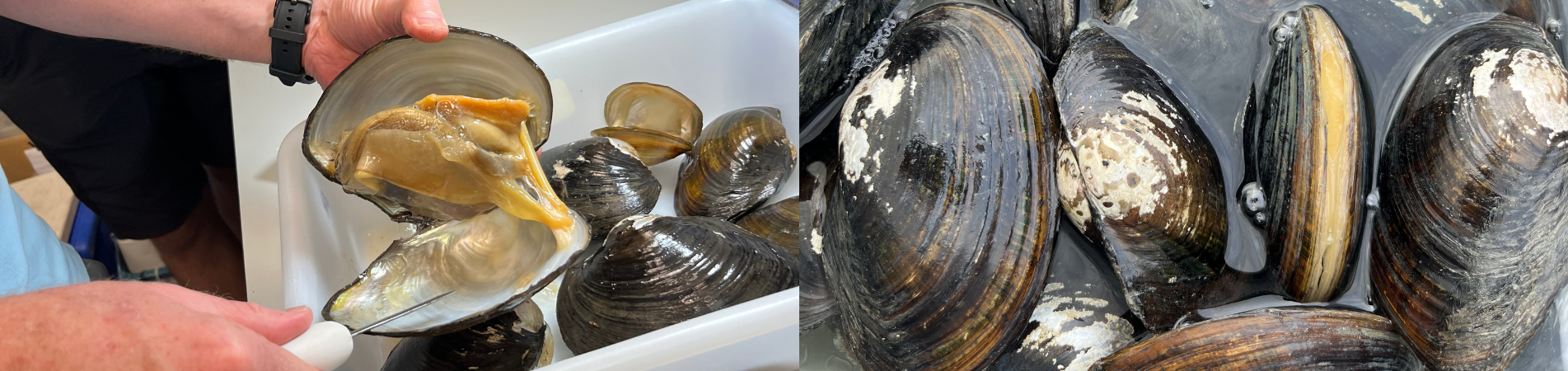
Freshwater mussels have a vital role in aquatic ecosystems. They act as biofilters that enhance water quality by removing algae, suspended particles, excessive nutrients and pollutants. They promote wetland biodiversity by providing habitat and food for various wildlife animals.   

The two freshwater mussels we added to the ponds: 

  • Chinese pond mussel (Sinanodonta woodiana) is a freshwater mussel native to East Asia. It was once widespread in Hong Kong's muddy-bed streams, freshwater fishponds, and reservoirs, but its distribution is now in decline. This mussel is associated with Rose Bitterling (Rhodeus ocellatus), an uncommon native freshwater fish that depends on the mussel for reproduction.   
  • Triangle sail mussel (Sinohyriopsis cumingii) is endemic to China. It is a major species used in freshwater pearl aquaculture and is also employed to improve water quality in aquaculture systems. This species is also recognised as a Chinese herbal medicine.  
Stakeholder Engagement

We identified key stakeholders and engaged with them throughout the process, soliciting comments and advice. The participatory process also helps us build trust with stakeholders and nurture potential collaborators. By integrating diverse experiences and conservation goals from different communities, we aim to enable all sectors to participate in the conservation efforts of the Lok Ma Chau Wetland.  

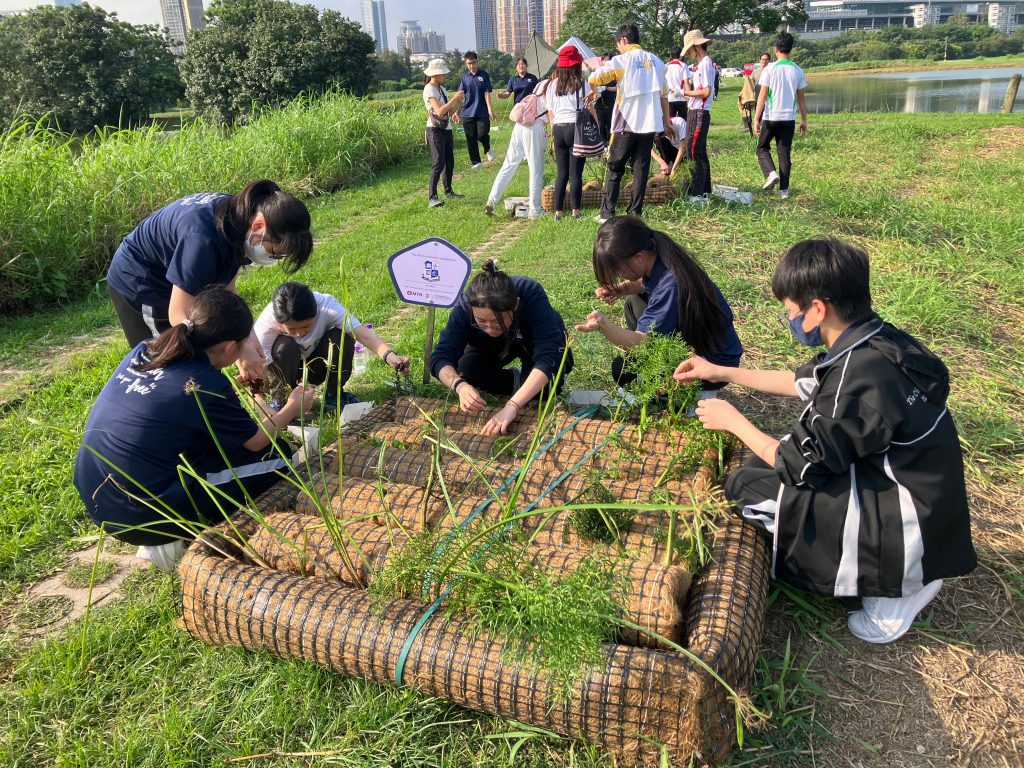
We launched the Pilot Wetland Nursery Programme on Campus. The programme has successfully engaged over 50 junior secondary school students from five different schools. Through lectures, field visits, and hands-on cultivation and management of wetland plants, students received a comprehensive learning experience to understand wetland ecology. 

Students’ cultivation efforts have now been transplanted into the Lok Ma Chau Wetland, supporting the ongoing sustainable development of the area. 

News & Media
MTR highlights its ecological work in Lok Ma Chau
Read More
港鐵生態補償 稱落馬洲濕地鳥種較2007年增25%
Read More
港鐵與港大合作於落馬洲濕地推保育措施 研究可持續濕地管理方案
Read More