
Sustainability Sharing Seminar for the Retail Sector: Insights & Best Practices
21st October 2025 (Tuesday)

Environmental, Social, and Governance (ESG) considerations are rapidly reshaping the retail landscape across Asia Pacific, driven by evolving consumer expectations and mounting environmental challenges. According to the KPMG GS1 Navigating the Future of Seamless Commerce in Asia Pacific (2024) report[1], only 11% of consumers in 14 Asia-Pacific markets stated that sustainability does not influence their purchasing decisions. The majority actively seek brands with clear sustainability commitments—53% are more likely to choose sustainable products, while significant proportions prioritize waste reduction through recycling (49%), sustainable sourcing of raw materials (31%), and eco-friendly packaging (30%). Additionally, 28% value brands with robust climate action or net-zero strategies, and 22% are concerned with fair labour practices, underscoring ESG as a critical factor in consumer choice.

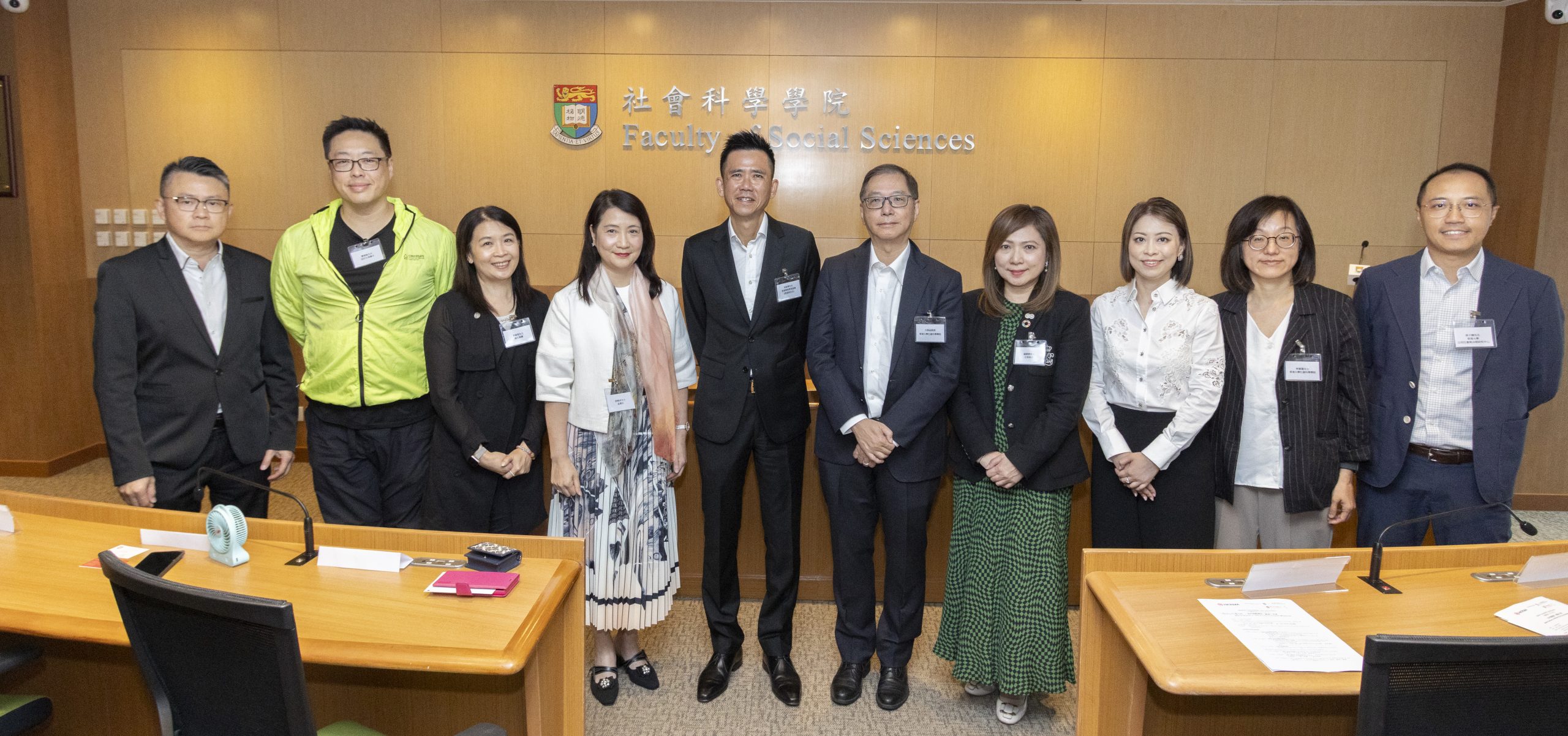
To accelerate ESG progress and foster collaboration, the Hong Kong Retail Management Association (HKRMA), the Faculty of Social Sciences (FOSS) at The University of Hong Kong (HKU), and the Centre for Civil Society and Governance, HKU, co-hosted the Sustainability Sharing Seminar on 21 October 2025. The event convened over 60 sustainability practitioners from 26 leading corporations, SMEs, and non-profit organizations across the retail value chain, providing a dynamic platform for industry dialogue, knowledge exchange, and cross-sector collaboration to advance ESG transformation in Hong Kong’s retail industry.


A Glimpse of Corporate Insights

Six esteemed speakers shared their sustainability journeys, offering diverse insights from across the retail landscape. Jane Tong (Giormani), Miko Cheung (LAWSGROUP), Ophelia Lin (Meiriki Japan), Kim Siu (Watsons Water), and Joyce Chiu (Café de Coral) discussed how their companies are weaving sustainability into their strategic DNA. Their approaches emphasize building resilient, future-ready business models that address evolving ESG reporting requirements, growing demand for supply chain transparency, and shifting consumer expectations.

Highlights of their strategies include:

  • Championing repair, refurbishment and upcycling to extend product lifespan, promote resource circularity, create new revenue streams, and enhance customer loyalty;
  • Adopting eco-friendly materials and minimalist packaging to reduce waste while ensuring product protection;
  • Integrating employee wellbeing initiatives to boost productivity and support sustainable organisational growth;
  • Fostering youth entrepreneurship and innovation for broader societal impact;
  • Communicating compelling sustainability narratives to stakeholders—including senior management, suppliers, and employees—to align strategic vision, shared purpose, and mutual benefits to galvanise collective action.


Complementing these industry perspectives, Elsa Lam from the FOSS’ Experiential Learning Team provided an academic viewpoint on talent development. She underscored the transformative power of experiential learning to bridge knowledge gaps, cultivate critical skills, and prepare the next generation of sustainability leaders—illustrating the vital synergy between academia and industry in advancing ESG capacity.


Panel Discussion: Key Takeaways

The panel discussion distilled several actionable insights:

  • Governance from the Inside Out: Robust governance is fundamental to sustainable success, requiring cross-departmental collaboration and active staff engagement.
  • ESG as Corporate DNA: Sustainability must be embedded in company values, operations, and culture, not treated as an add-on. Purpose-driven management is essential, aligning actions with the company’s mission and addressing broader societal challenges.
  • Commercialising Sustainability: Aligning sustainable practices with market needs transforms environmental and social responsibility into business advantage. Companies can build strong brands, enhance efficiency, and develop circular products and services for new revenue streams and competitive edge.
  • Two-Way Talent Development: Mutual learning between managers and interns fosters a vibrant sustainability culture. Internships serve as practical training for emerging talent, while managers benefit from fresh perspectives, driving innovation and engagement.


Looking Ahead

The seminar concluded with renewed optimism and commitment to translating ESG ambitions into impactful action. As Hong Kong’s retail sector advances its sustainability journey, continued collaboration between industry and academia will be essential for fostering a greener, more resilient future.


References:

KPMG. (2024). Navigating the future of seamless commerce in Asia Pacific. https://assets.kpmg.com/content/dam/kpmgsites/xx/pdf/2024/06/navigating-the-future-of-seamless-commerce-in-asia-pacific.pdf

Category :   Event

Other Happenings
Event
Workshop on Special Issue in Voluntas: The Nonprofit Sector and Environmental, Social, and Governance (ESG)
The workshop on the Special Issue in Voluntas: The Nonprofit Sector and ESG, organised by the Centre for Civil Society and Governance at The University of Hong Kong, was successfully convened on January 8-9, 2026. This engaging two-day event brought together scholars, as well as professionals from the corporate and nonprofit sectors, to discuss the fascinating research conducted by international authors contributing to this special issue. Each presentation was followed by lively discussion and Q&A sessions, reflecting high engagement and diverse perspectives from participants. The workshop successfully fostered meaningful dialogue on the ways the nonprofit sector intersects with ESG. The workshop featured five comprehensive panels comprising a total of 12 insightful papers, addressing key themes across the ESG landscape: Philosophical and Cultural Perspectives on ESG Highlighted that ESG is not merely a technical framework, but also a deeply normative and culturally embedded concept Governance and Sustainability Examined how ESG is interpreted and implemented in concrete organizational and policy settings Public Perceptions of Nonprofits and ESG Explored how nonprofits are perceived, evaluated, and engaged by the public and other stakeholders: Trust, legitimacy, and participation Collaboration and Cross-Sector Partnerships in ESG Discussed the nuanced treatment of collaboration. Power asymmetries, strategic alignment, and the risks of mission drift. ESG Metrics, Reporting, and Evaluation in the Nonprofit Sector Addressed the need to balance standardization and comparability with contextual sensitivity and mission-specific goals Across these discussions, several cross-cutting themes emerged: ESG is not a one-size-fits all framework. Its meaning and implications vary across cultures, sectors, institutional contexts, and organizational forms Nonprofits are not passive recipients of ESG pressures. They actively interpret, adapt, and sometimes resist ESG frameworks Collaboration is central to advancing ESG for social good 🏬Field Visit to Nan Fung Group at AIRSIDE: Insights into Corporate Sustainability and NGO Collaboration Participants learned about Nan Fung’s sustainability framework, SEWIT, including management tools and impact measurement methods. SEWIT’s pillars: Social Cohesion, Environment, Wellness, Innovation, and Technology, guiding long-term business and community sustainability. Engaged in in-person exchanges with community stakeholders at Good Date Village, grounding the framework in real-world practice. A big thank you to the Nan Fung team for hosting us and for the insightful sharing. We also extend our gratitude to all participants for making this event a valuable platform for knowledge exchange and collaboration. We look forward to further academic contributions in ESG within the nonprofit sector.  
Learn more
Event
Forest Village Festival 2025
The “Forest Village Festival” is an annual celebration organised towards the year-end to provide fun-filled events for the public to appreciate the revitalisation effort of Mui Tsz Lam and Kop Tong. The festival offers visitors the unique experience of living with nature and culture through various thematic workshops, ecotours, and overnight camping. By featuring the countless natural, social and cultural capitals and assets at the two villages, we hope the public can be inspired and join us in protecting the valuable landscape of our countryside. This year, there will be a two-day carnival, the New Year's Sunrise Tour and the Winter Solstice Camping event to explore the rural treasures. Further details are only available in Chinese or you may send your enquiries to ruralsd@hku.hk
Learn more
Event
Recognition Ceremony of the “Co-Create for Good” Partnership Engagement Programme (共創行善企業及策略伙伴計劃嘉許禮)
The Centre for Civil Society and Governance was invited to attend the Recognition Ceremony of the “Co-Create for Good” Partnership Engagement Programme (共創行善企業及策略伙伴計劃嘉許禮). This event was organized by the Christian Family Service Centre (CFSC). Our Director, Professor Wai-Fung Lam, was invited as the guest speaker for the event’s sharing session. He delivered a talk titled “Investing in Social Impact – How Businesses Collaborate with the Social Welfare Sector to Build Sustainable Business Models.” It is one of the largest events hosted by CFSC, aiming to recognise companies that collaborate with CFSC to make our society a better place. CFSC also showcased its six strategic focus areas: mental health, the silver economy, poverty alleviation, ESG (environmental, social, and governance), digital innovation and information technology, talent development, and cultural development in the exhibition area. Once again, we congratulate CFSC on the great success of the ceremony.
Learn more