The 20th Biennial Conference of the International Association for the Study of the Commons (IASC)
15th June 2025 (Sunday)

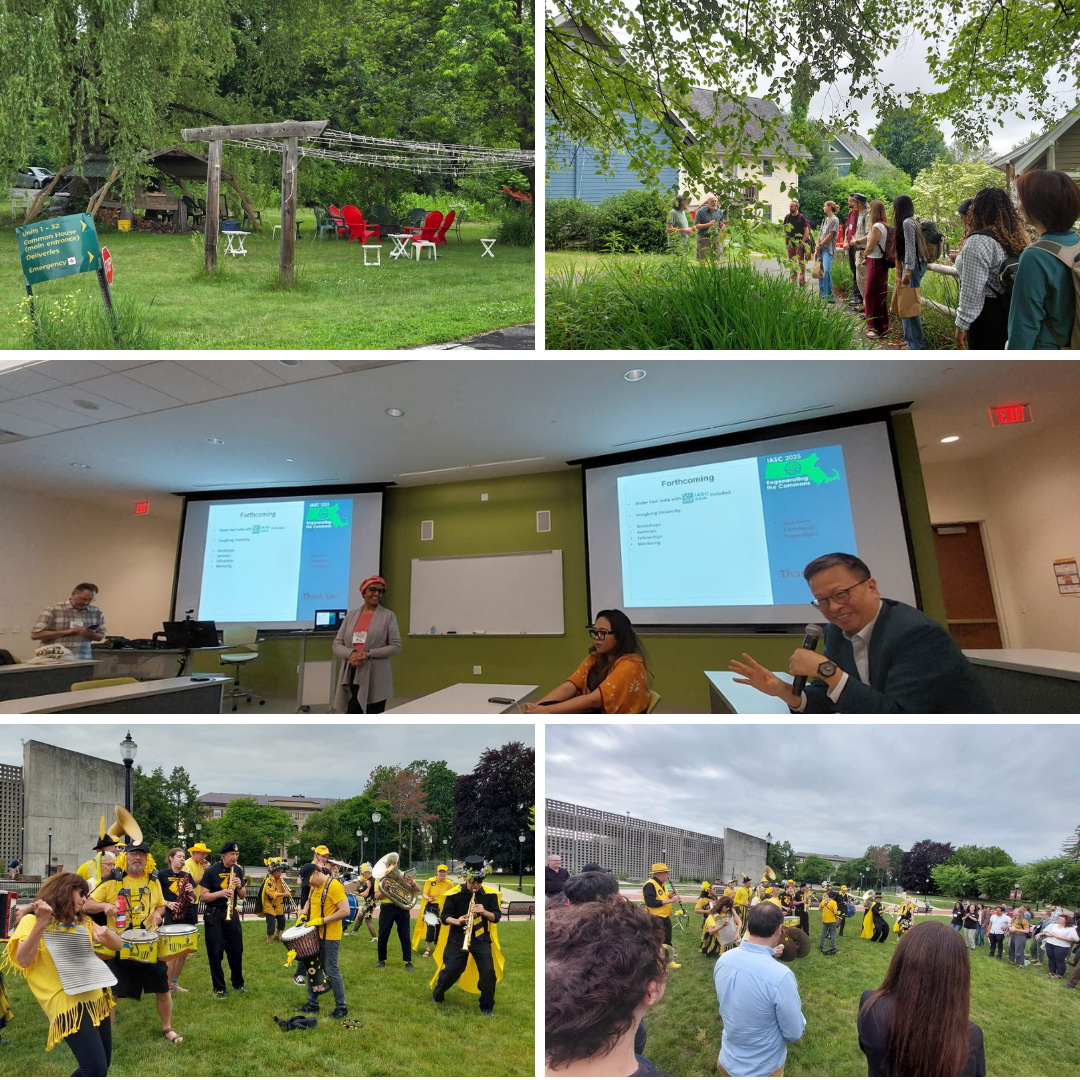
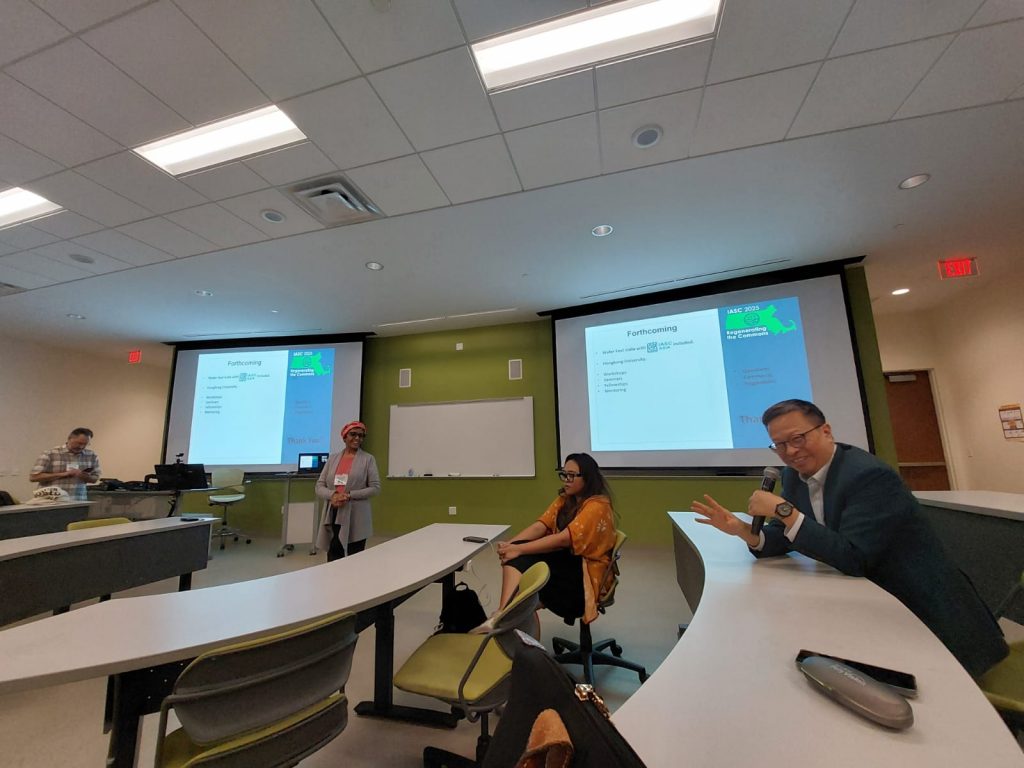
Professor Wai Fung Lam, Dr. Jessica Williams and Dr. Vivian Chu attended the 20th Biennial Conference of the International Association for the Study of the Commons (IASC) at the University of Massachusetts Amherst (June 15–21, 2025).

Relating to the Centre’s Forest Village project, Jessica presented on “Participatory Approaches to Ecosystem Service Assessment: Integrating Community Assessment and Values in Revitalising peri-urban Systems” as part of the panel on “Decision-Making in Social-Ecological Systems and Commons Dilemmas” which was also moderated by Dr. Williams. Here, initial research findings were shared to highlight how such participatory approaches can identify diverse stakeholder needs in complex social-ecological systems, provide insights into management approaches and manage trade-offs.

Vivian’s presentation was based on experiences accumulated from a number of the Centre’s project. Her presentation ‘University-NGO collaborations for the co-creation and scaling of social innovations’ was part of the panel titled ‘Co-creating Social Value and Innovation’ where we aim to contribute to the literature through a typology of universities-NGO partnerships in relation to the level of complementarity and the outcomes achieved.

Part of the outcomes we highlighted in the presentation is the effect of scaling social innovations. Special thanks to Brenda Bushouse for organizing and moderating this insightful discussion.

Vibrant exchanges with fellow panellists and participants—including Lu Yu, Tamara Keshecki, Isabel Guerrero, Raul Lejano, (among many others) – have contributed to enriching our conference experience.

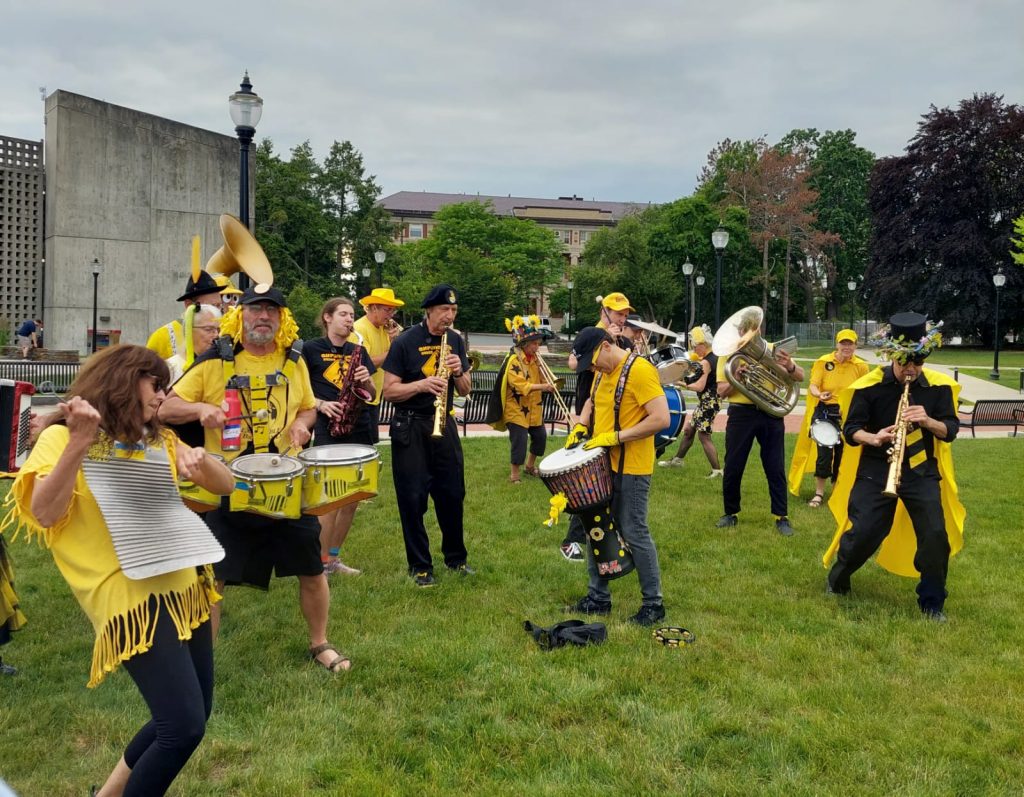
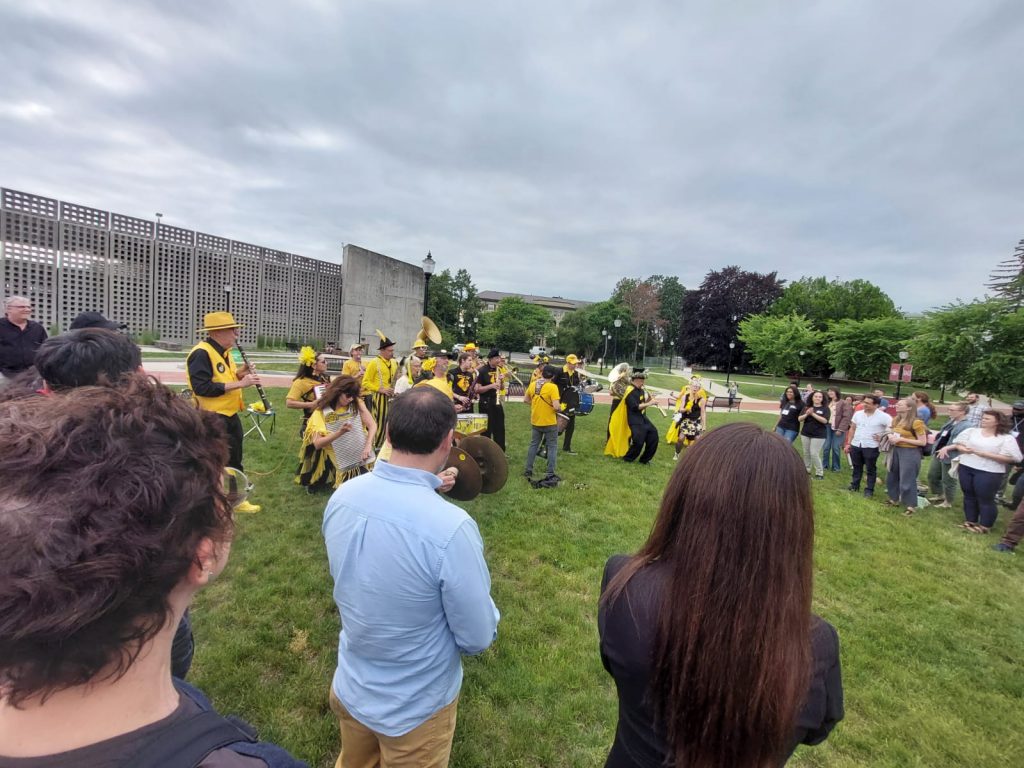
The first day of the conference was concluded with an incredible performance by The Expandable Brass Band bringing their joyful music and spreading their charm to help everyone to feel refreshed for the week of intellectual exchanges.
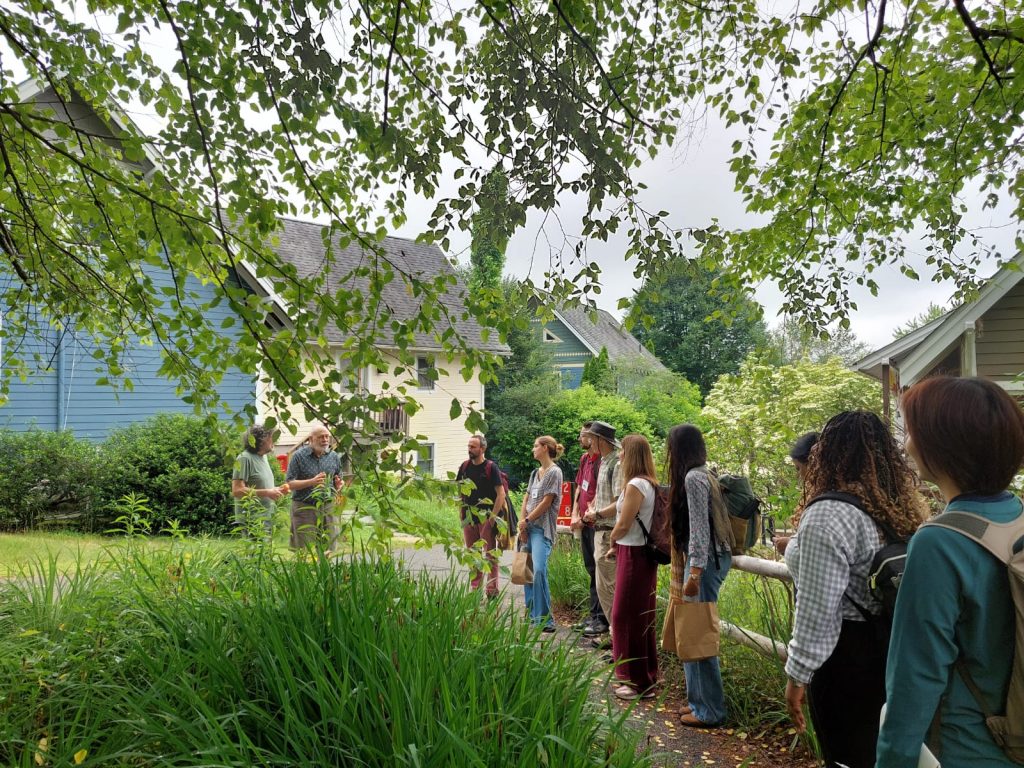
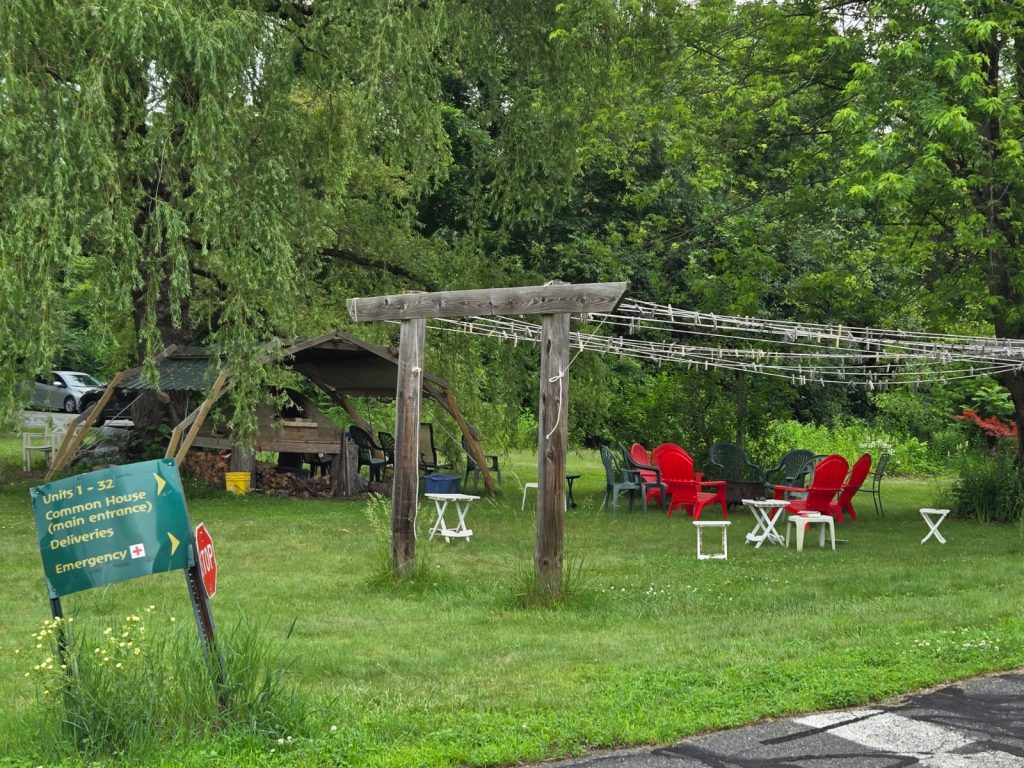
Many thanks to colleagues at the University of Massachusetts, the IASC 2025 organisers, for arranging the insightful excursions with Cherry Hill Cohousing and Sirius Ecovillage.

Cherry Hill Cohousing has 32 houses and a common house (community building), a wood workshop, an office building, and gardens that are shared and completely managed by community members. We had the opportunity to learn how a group of ~80 people self-organises their community life, how decisions are made and the ways in which management tasks are shared. Our host Jerry explained the difference between decisions made through consensus versus a consent-based system and the latter is the mode that they find works best for their decentralized governance system.

Sirius Ecovillage operates as both a non-profit educational center and spiritual community that embodies sustainable living. Members of the community share the responsibilities of managing the grounds which contain organic gardens, greenhouses, and other facilities. It was inspiring to find out how members of this intentional community support each other’s wellbeing and personal growth in pursuits of sustainability and mindfulness.

We are grateful to our knowledgeable hosts Jerry Koch-Gonzalez (Cherry Hill) and Marianne Connor, Education Program Manager (Sirius) from whom we have learnt a great deal.
Category :   Research

Other Happenings
Event
Empowering Inclusive Sports through Cross-Sector Collaboration: Brining VR Cycling into Rehabilitation Services
The Centre for Civil Society and Governance (CCSG) at HKU, through the "Jockey Club Collaborative Project for Inclusive Employment," is dedicated to building cross-sector platforms that connect diverse stakeholders to realize the goals of inclusive employment and living. Recently, our project team partnered with local shared-cycling brand Locobike to host an inclusive cycling workshop at St. James' Settlement WE NET Club District Support Centre (Eastern). Key Highlights: Integration of Technology and Rehabilitation Services: The workshop showcased cycling equipment integrated with Virtual Reality (VR) technology. This allows persons with disabilities (PWD) to experience the joy of outdoor sports within a safe and controlled indoor environment, effectively breaking down physical and environmental barriers. Evidence-Based Feedback: The session served as a platform to gather insights from frontline rehabilitation professionals. By leaving the equipment at the centre for member trials, the team continues to collect user data and experience feedback, assisting the enterprise in refining its products and services to better suit diverse needs. Advancing Social Health and Sustainability: This exchange exemplifies how businesses can leverage their core competencies to generate social value. By expanding exercise options and enhancing engagement for PWD, we hope to improve their long-term physical and mental well-being—a direct contribution to Social Sustainable Development Goals (SDGs). We look forward to fostering further dialogue between the business sector and social welfare/rehabilitation institutions. Together, we can co-create products and services that cater to diverse needs, building a barrier-free and inclusive society for all.
Learn more
Event
Building a Vibrant Social Enterprise Ecosystem: Insights from the “ESG Social Contribution Award”
Recently, The Hong Kong General Chamber of Social Enterprises (HKGCSE) successfully organised the inaugural “ESG Social Contribution Award”, celebrating companies that have long supported social enterprises and fostering greater collaboration between the corporate and social sectors. As one of the panel speakers, Dr. Winnie Law, Deputy Director at the Centre for Civil Society and Governance of The University of Hong Kong, shared valuable insights on the importance of building a comprehensive social enterprise ecosystem. Dr. Law emphasised that the success of social enterprises relies not only on individual efforts but also on the collective support from government, enterprises, investors, and communities to form a sustainable and vibrant ecosystem. She highlighted three core elements vital for social enterprise sustainability: a well-defined and genuine social mission, a viable and sustainable business model, and continuous innovation in products, services, or operations. The event showcased the increasing commitment of the business community to ESG principles and social responsibility. The awards also foster meaningful dialogue and partnerships taking place in the social enterprises’ ecosystem. These have laid a solid foundation for future collaborations and the continued growth of social enterprises, demonstrating the vital role of multi-sector cooperation in creating social impact through business. 👉Read the full article for more details: https://www.am730.com.hk/%E6%9C%AC%E5%9C%B0/1019407/esg%E5%95%86%E7%A4%BE%E5%85%B1%E5%89%B5%E5%A4%A7%E7%8D%8E-%E7%A4%BE%E4%BC%81%E7%B8%BD%E6%9C%83%E6%90%AD%E5%B9%B3%E5%8F%B0%E4%BF%83%E9%80%B2%E5%95%86%E7%A4%BE%E5%8A%A0%E5%BC%B7%E5%90%88%E4%BD%9C?fbclid=IwY2xjawQwMotleHRuA2FlbQIxMABicmlkETF1RFh4NHVSUU1WYmN6aUFEc3J0YwZhcHBfaWQQMjIyMDM5MTc4ODIwMDg5MgABHhfNxytf_Lol2yqIunFcwQqIQA4AM_ivyu1BiYsWUsaJLV4WzM8pRnmkxiRY_aem_zXTt8XREovM_1ihlFLh63A
Learn more
Event
Searching for the Sustainability Purposes of Business—an Inspiring Case for the Textile and Apparel Industry
For decades, the textile and apparel industry has been associated with environmentally polluting practices and labour‑intensive production.These have flagged at many fronts of the sustainability agendas. Plenty of brands and companies have progressed and reduced social and environmental harms through innovation and technology. At Esquel, we saw the start of a paradigm shift towards sustainability attainment. Last week, our rural sustainability and corporate sustainability teams had the privilege of attending the Open Day at Integral, located among the scenic landscape of Guilin, China, which embodies the brand’s philosophy of sustainability. In the two fruitful days, our team has had the opportunity to learn about their journey in sustainability transition, Whether through developing innovative waterless dyeing technologies, exploring plant‑based natural dyes, or advancing strategies for quality employment—including workforce upskilling, lifelong learning, and employee wellbeing—the Group demonstrates a holistic approach to sustainable transformation. These initiatives not only reflect the corporate commitment to minimizing its environmental impact and contributing to the community but also demonstrate that the investment in sustainability, though often seen as a long shot, helps the corporation build a competitive advantage in the long run. Through the efforts in research & development, Esquel is able to expand its business portfolio beyond being a manufacturer to a knowledge-based innovation company with the goal of pushing greener standards in the industry. Ultimately, Esquel set its eyes on scaling the application of natural dyes across the textile industry, with the collective effort of academic and research institutions to promote innovation, knowledge transfer and wider adoption of nature-based solutions. There are plenty for our team to learn and reflect upon and we look forward to having future opportunities to exchange further with great minds at Esquel!
Learn more