


Beating the Heat: Lessons from Singapore for a Cooler Hong Kong
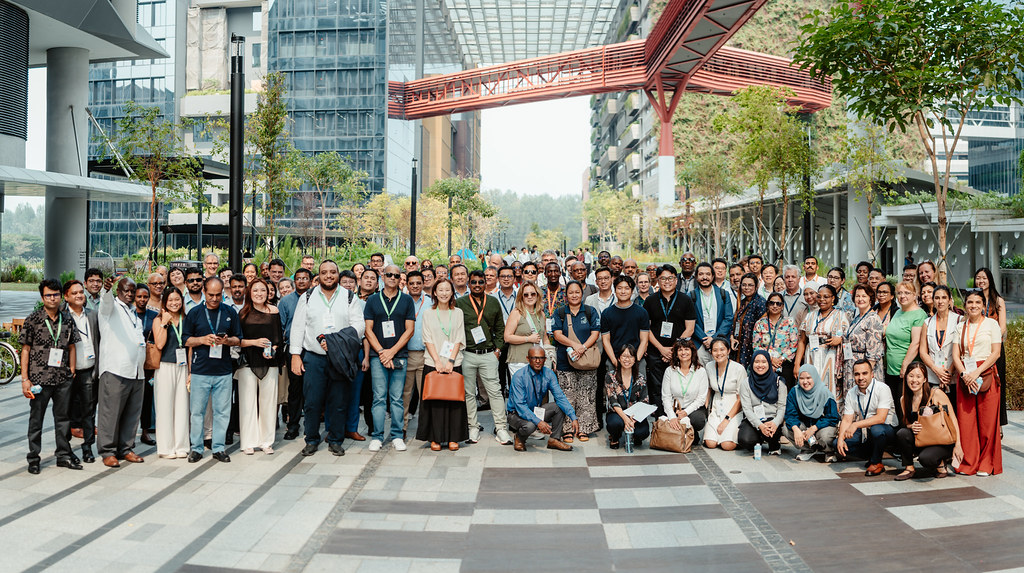
The Beat the Heat Training & Study Tour was organised by the United Nations Environment Programme (UNEP) in Singapore, in partnership with the Cities Climate Finance Leadership Alliance (CCFLA) and the Cool Coalition. It brought together international experts, policymakers, and researchers to address urban heat and climate vulnerability for more liveable cities. Two of our Centres staff members, Miss Daisy Yeung and Dr Tai Hu, joined global delegates to explore how Nature-based Solutions (NbS), passive cooling technologies, and collaborative governance can be deployed to strengthen heat resilience across nations. The programme provides an insightful reference for strengthening Hong Kong’s heat resilience. The central lesson we learn from the study tour is that heat exposure can be effectively reduced through design and implementation of passive cooling before relying on energy-intensive cooling measures. For example, Singapore integrates greenery, shade and natural ventilation into urban planning, supported by environmental modelling that helps planners assess how urban development can make use of wind corridors, shadings, and greenery’s evaporative effects to influence local thermal conditions. Climate-sensitive planning was a theme in the training and site visits. At Punggol Digital District (PDD), structural massing and building orientation are aligned with prevailing wind directions. PDD’s car-free boulevard and naturally ventilated public plazas eliminate vehicle heat exhaust. These measures demonstrate why cooling should be considered across neighbourhoods, rather than addressed solely within individual buildings. As a trained botanist, Dr Tai is particularly amazed by the integration of greenery as a passive cooling method. Greenery provides another layer of protection. Singapore’s roadside planting, park networks, rooftop gardens and vegetated façades combine shading with opportunities for biodiversity and recreation. The Landscaping for Urban Spaces and High-Rises (LUSH) scheme, in particular, illustrates how planning requirements and incentives can embed greenery within building and city development, making cooling part of the urban fabric rather than an optional addition. The LUSH scheme is very much a policy-driven, regulatory NbS. For Hong Kong, potential priorities during the city’s new urban (re)-development can include more continuous shaded walking routes linking homes, transport and community facilities; targeted tree planting in exposed public spaces; and maybe even trials of cool roofs and external shading on suitable buildings. Whenever possible, urban development projects should prioritise more with the vulnerable demographics in mind, such as older people, outdoor workers and residents with limited mobility, making cooling more affordable and accessible, while accounting for maintenance, typhoon safety and competing uses of space.
Learn more