
Project Team: Dr. Winnie LAW, Ms. Katie CHICK, Mr. Darwin LEUNG, Ms. Daisy YEUNG, Dr. Vivian CHU, Dr. Jessica Marie WILLIAMS
Research Collaborators: Dr. Billy HAU, Mr. Wander MEIJER, Dr. Stephan GALE, Dr. MANG Lung Cheuk, Dr. Luke BRANDER, Dr. Fernanda CARDOSO, Ms. Kate MARTIN, Ms. Ada LAM, Ms. Pearlie YIU
Background of Feasibility Study
As Nature-based Solutions (NbS) become increasingly central to climate adaptation, biodiversity conservation and sustainable urban development, forest restoration should be viewed not as isolated tree planting, but as a strategic, landscape-scale form of green infrastructure. A connected network of restored forest sites can enhance ecological resilience, improve community well-being, and generate measurable environmental, social, cultural, and economic value.
The long-term success of restoration also depends on people, governance, and shared stewardship. Forests are more likely to thrive when communities understand, value, and actively participate in their restoration and management. Community benefits and stakeholder ownership are therefore not peripheral outcomes—they are core conditions for scalability and long-term impact.
Against this backdrop, the Centre for Civil Society and Governance at The University of Hong Kong (HKU-CCSG), in collaboration with Kadoorie Farm and Botanic Garden and a multidisciplinary team of experts in ecology, urban planning, environmental economics, and sustainable finance, is undertaking the Feasibility Study for a Pilot Forest Restoration Project in the Northern Metropolis (NM) (hereafter “the Study”).
The Study examines how forest restoration at the Tit Hang pilot, alongside five other potential restoration sites, can be advanced through a Forest Park network vision—shifting from a standalone restoration effort to a wider terrestrial NbS system for Hong Kong. The proposed system aims to restore degraded hillsides while generating investable, policy-relevant, and community-centred value through nature-based tourism, education, wellness, and volunteering programmes. In doing so, the Study seeks to demonstrate how forest restoration can be designed, financed, and governed as a scalable NbS model for Hong Kong.
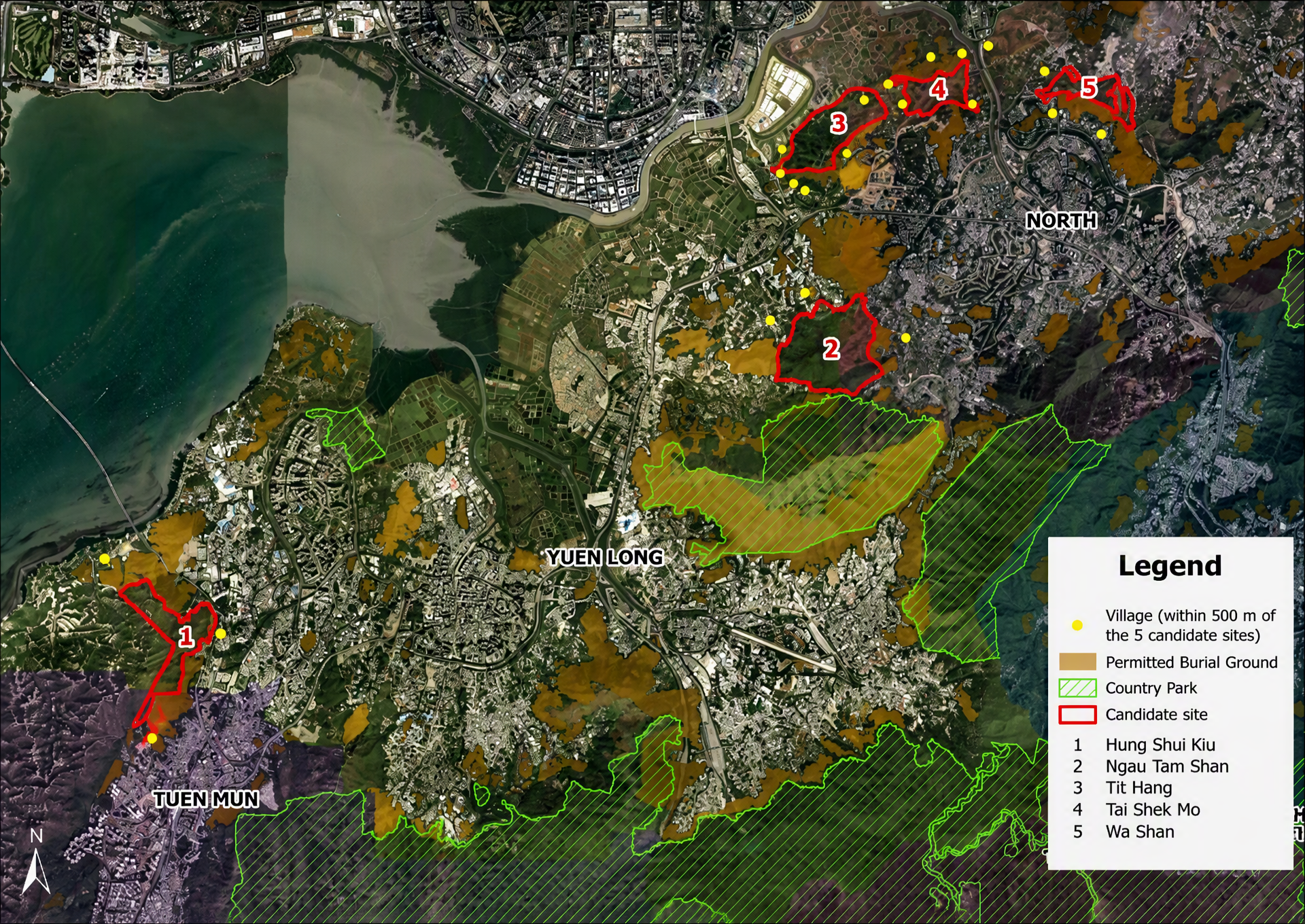
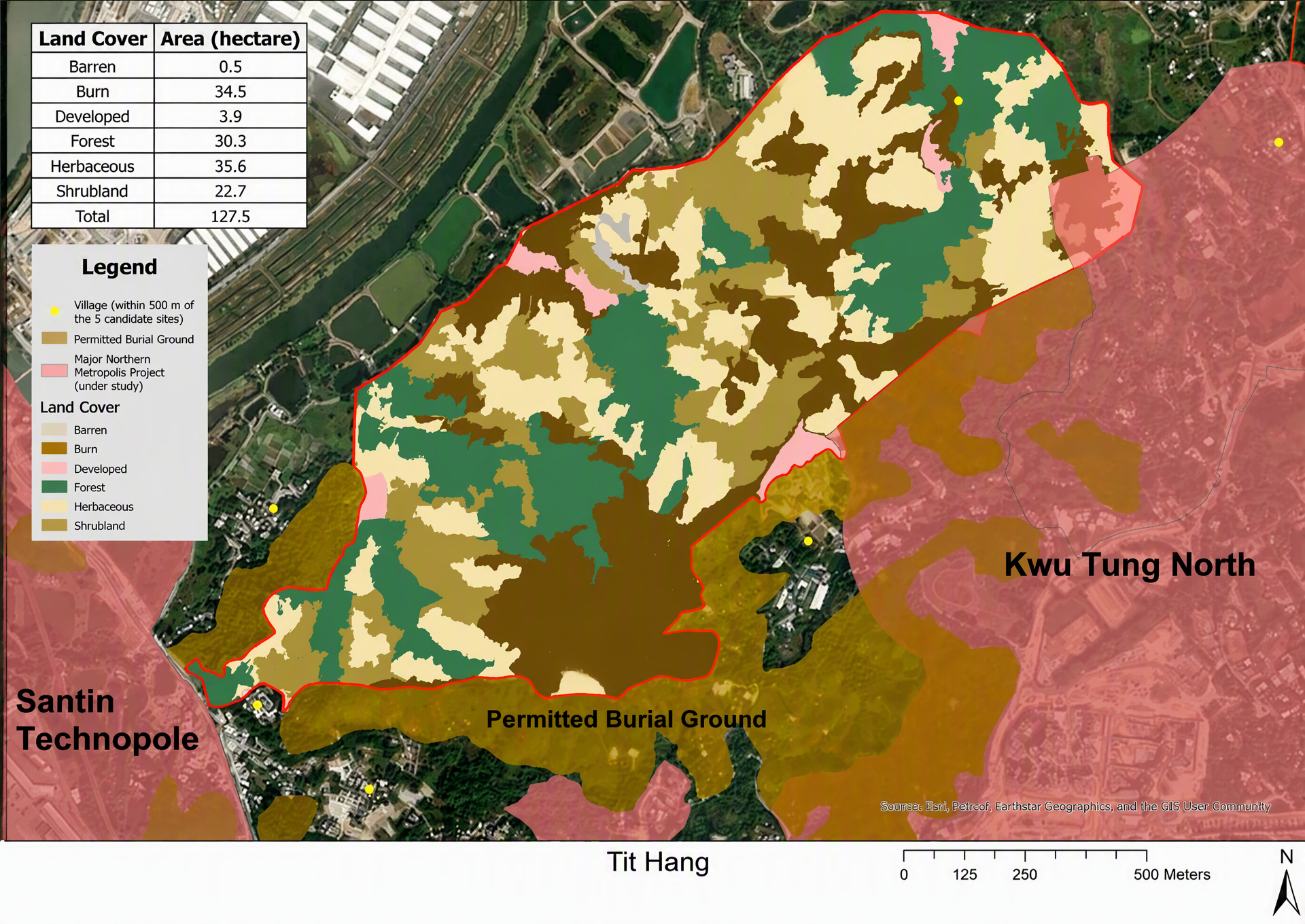
Image source: prepared by KFBG
The Study adopts a comprehensive evaluation framework structured around six workstreams, including:
- Biodiversity enhancement – assessment of ecological improvements between the site’s current degraded conditions and its projected state after restoration;
- Community benefits – assessment of potential social and well-being impacts on local communities, communities of interest and the wider society;
- Existence and recreational value – assessment of the benefits people derive simply from knowing restored ecosystems exist and from visiting them, quantified through valuation survey and the travel cost methodology;
- Carbon sequestration – estimation of carbon sequestration potential referencing established research;
- Implementation costs and cost-benefit analysis – assessment of net present value to demonstrate that long-term benefits outweigh front-loaded investment costs;
- Investment case – development of a business case capable of attracting support from philanthropic capital, impact investors, public funding, and potentially carbon- and biodiversity-related finance mechanisms.
Taken together, these workstreams provide the basis for evaluating the Tit Hang pilot as both a site-specific restoration project and a potential model for wider application across the Northern Metropolis.
Forest Park in the Northern Metropolis as Hong Kong’s Largest Terrestrial NbS
Building on the above premises, the Study advances a Forest Park vision for the NM: a connected network of restored forest landscapes that functions as strategic green infrastructure. The vision supports ecological resilience, community well-being, cultural continuity, and regional connectivity through four levels of integration.
1. Integrate Feng Shui Woods into major NM developments
Position restored forest systems as the Northern Metropolis’ modern Fung Shui Woods — a landscape-scale NbS that consolidates fragmented restoration efforts and mitigates hill fire, flooding, heat and landslide risks.
2. Integrate biodiversity enhancement with social and community value
Move beyond ecological restoration to generate broader public value, using green corridors and linkages to connect San Tin Technopole, the Lok Ma Chau Loop and residential areas with restored forest landscapes.
3. Integrate new NM populations and Indigenous villages
Use the forest network as a shared green lung that connects future urban centres with village landscapes, strengthening stewardship, social cohesion and place identity.
4. Integrate the NM with the Greater Bay Area forest park agenda
Establish Hong Kong’s first Forest Park network in parallel with Shenzhen and wider Greater Bay Area (GBA) initiatives, laying the foundation for the Northern Metropolis Trail(北都徑)and a scalable NbS policy and investment model.
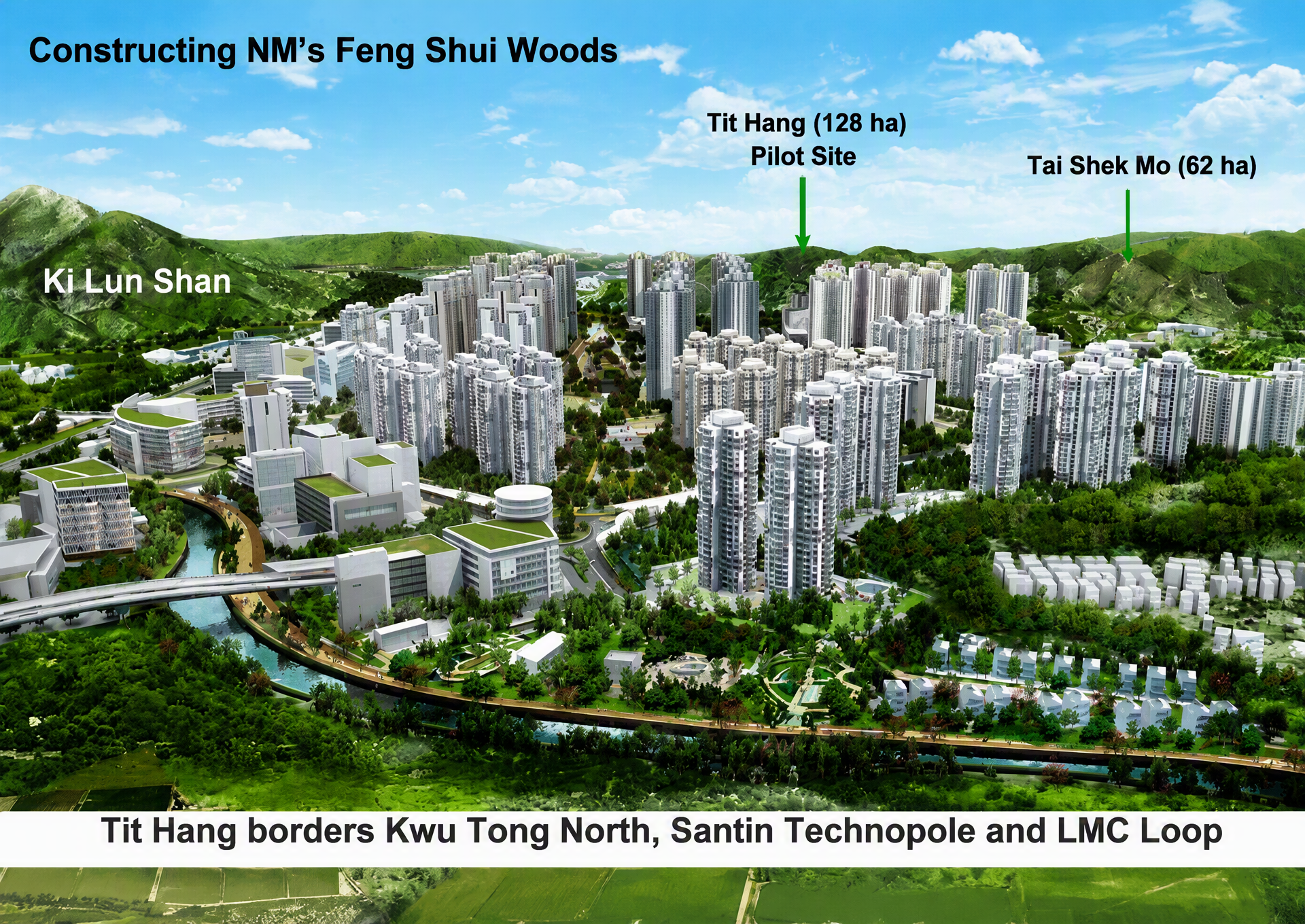
Image source: adapted from the image accessed from Development Bureau of HKSAR Government
Building a Community Benefit Assessment Framework
While the Forest Park vision provides a strategic framework for landscape-scale restoration, its long-term success depends on whether restoration can deliver meaningful, measurable, and locally relevant community benefits. Nevertheless, assessing these outcomes remains a methodological challenge, largely because no widely adopted framework currently exists for comprehensively and systematically evaluating the socio-economic, cultural, and well-being impacts of forest restoration initiatives.
Although existing frameworks and standards, such as the IUCN Global Standard for Nature-based Solutions and Hong Kong’s Nature-based Solutions Design Guidelines, acknowledge the importance of social benefits, stakeholder participation, inclusive governance, and equity, they do not set out dedicated well-being domains and indicators for systematic assessment.
To address this gap, HKU-CCSG developed a transferable Community Benefit Assessment (CommBA) framework as a core output of the Study. The framework is designed to assess the community-level implications of forest restoration and related NbS programmes, and to support future NbS planning, implementation, adaptive management, stakeholder dialogue, evidence-based decision-making, and impact monitoring.
Drawing on an extensive literature review and stakeholder input, the HKU-CCSG team created a CommBA Wheel, which organises community benefits into five dimensions and 13 subdimensions. These dimensions capture the principal pathways through which forest restoration may contribute to community well-being, with each subdimension supported by relevant indicators and measures drawn from established literature and validated assessment instruments.
Adopting a participatory approach, the framework represents one of the first attempts in Hong Kong and the region to systematically assess the community-level outcomes of forest restoration and related programmes. Quantitative data are used to identify patterns and track changes over time, while qualitative evidence helps capture people’s lived experiences, priorities, and concerns. The assessment is also informed by expert judgement through a Delphi process. Together, community views, lived experiences, and local knowledge form the foundation of the assessment, while expert input supports the interpretation of findings and helps evaluate the wider significance of observed changes.
Following ground-truthing through the Tit Hang pilot and other near-term restoration initiatives, the CommBA framework will be refined for wider application across ecological restoration and NbS contexts. Over time, it is intended to evolve from a project-level assessment framework into a decision-support tool for project proponents, government agencies, impact investors and non-profit organisations, helping ensure that future NbS projects are not only ecologically sound, but also socially responsive, evidence-led and capable of delivering lasting societal value.
Stakeholder Engagement is a Key Enabler
Stakeholder engagement is a core component of the Study and the development of the CommBA framework. Given that forest restoration is shaped by the relationship between people and place, engagement is essential for understanding local values, needs, concerns, sensitivities and potential trade-offs.
The engagement process serves five main purposes:
(i) Introduce and explain the proposed forest restoration initiative at Tit Hang;
(ii) Identify stakeholders’ perceptions of potential benefits, concerns, sensitivities and trade-offs associated with the proposed restoration initiative;
(iii) Validate and refine the proposed CommBA dimensions, indicators, and assessment approaches through stakeholder feedback;
(iv) Assess stakeholders’ willingness and capacity to participate in project implementation, stewardship, monitoring, and governance; and
(v) Foster shared understanding, trust, and informed support among stakeholders to strengthen the long-term sustainability of restoration initiatives.
Engagement covered three stakeholder tiers: the local community, including villagers, Indigenous representatives, nearby farms and local schools; communities of interest, including green groups, professional bodies, education providers and sustainable tourism operators; and the public sector, including government departments responsible for planning, conservation, infrastructure and site management.
Between May and August 2026, nine engagement activities were conducted with over 70 participants, comprising three interviews and site visits with local stakeholders, two focus group meetings with communities of interest, and four meetings with relevant government departments and bureaux, including the Highways Department, the Agriculture, Fisheries and Conservation Department, the Civil Engineering and Development Department, and the Northern Metropolis Co-ordination Office under the Development Bureau.
Stakeholder engagement findings reveal strong social licence and clear strategic support for the proposed Tit Hang pilot. Stakeholders recognised forest restoration, within the Forest Park network vision, as a high-impact opportunity to enhance biodiversity, strengthen ecological connectivity, improve community well-being, and advance the wider NbS agenda within the Northern Metropolis. The pilot also offers a timely and practical contribution to broader national and regional policy priorities, including ecological civilisation, the National Forest City initiative, and the Beautiful China Initiative.
Next Steps
The Executive Summary of the Feasibility Study Report is expected to be released by the end of 2026. Further details will be announced in due course.