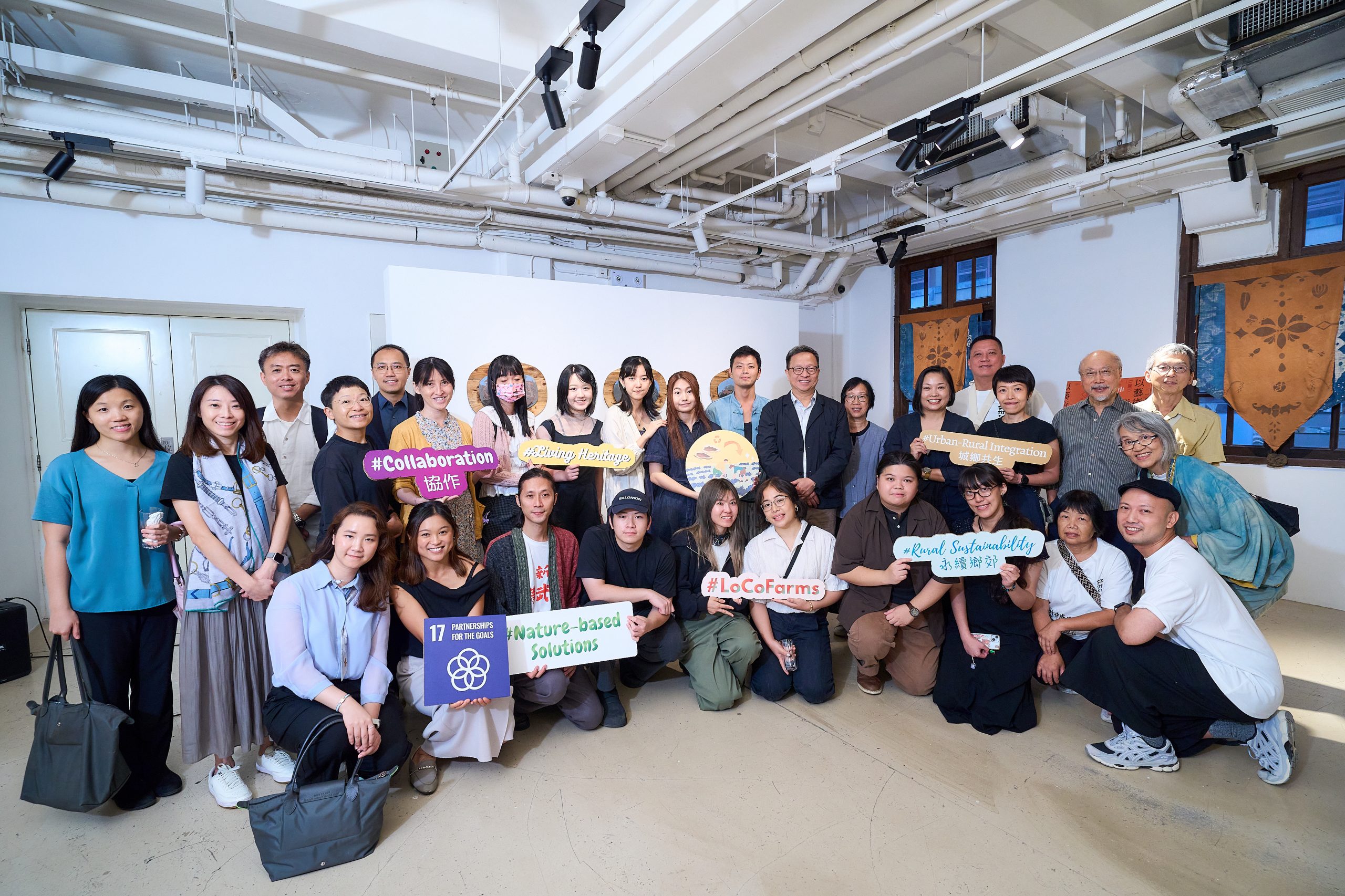
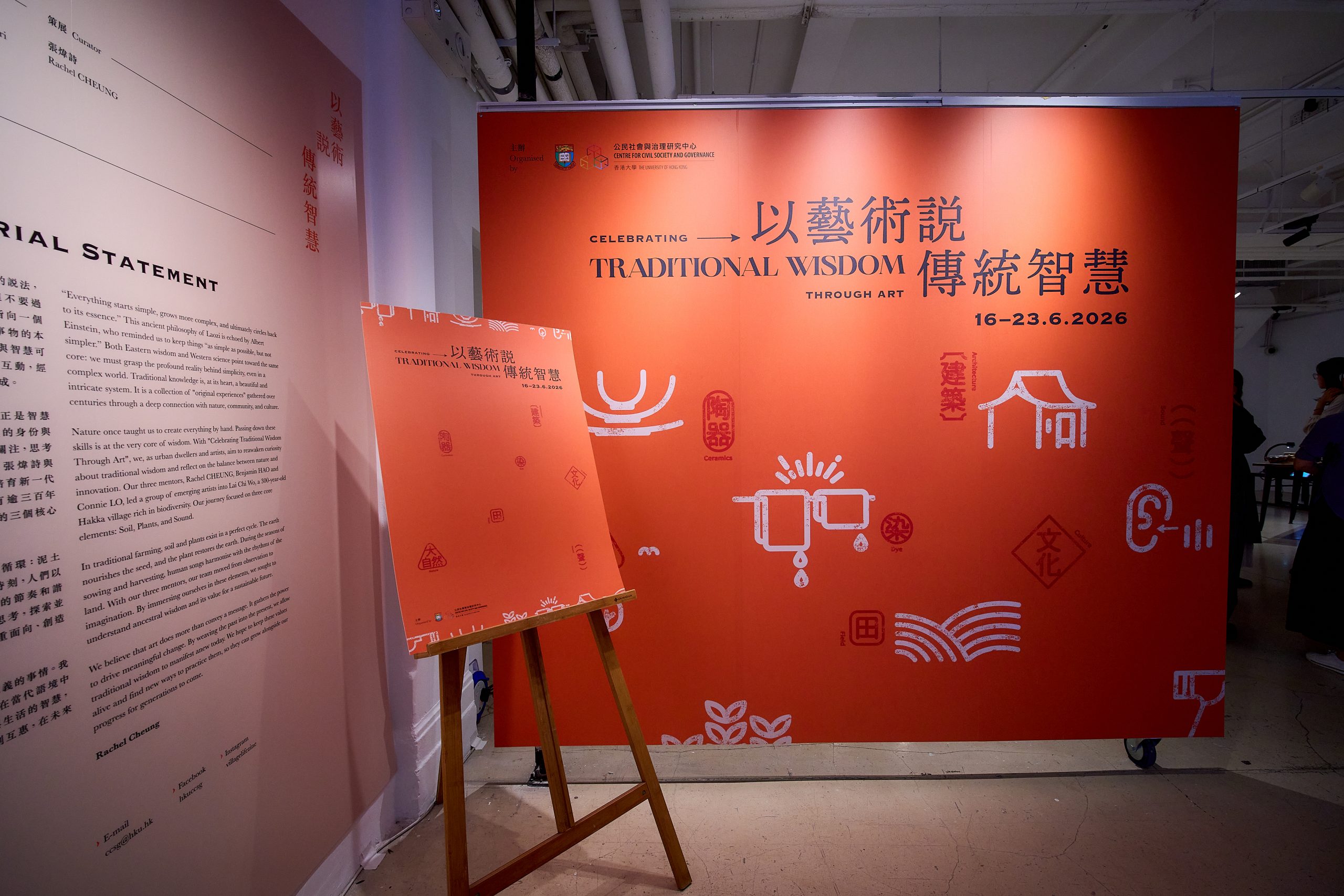
This project, centred on the 300-year-old Hakka village Lai Chi Wo, set out to conserve traditional knowledge while empowering both the local community and emerging artists. By immersing participants in the village’s rich biodiversity and cultural heritage, the programme focused on three core elements: Soil, Plant, and Sound. Guided by our staff and experienced mentors, artists explored the landscape, engaged with villagers, and rediscovered traditional crafts. They then translated their insight first in an Open House in Lai Chi Wo, and later in an 8-day exhibition in Central, Hong Kong.
The impact has been profound. Artists not only developed their creativity and traditional craft skills but also acted as bridges between rural wisdom and urban audiences. Activities included interactive workshops with social NGOs. These interactions brought Hakka heritage to life, making it accessible and relevant to a wider public.
Importantly, the project demonstrated the university’s effectiveness as a connector, linking academic research, community trainers, and the rural context. The incubation model piloted here highlights how universities can help foster sustainable urban-rural partnerships, positioning villages like Lai Chi Wo as living laboratories for creative, co-created revitalisation.