

About the SES Transformation Network
Coordinated by the Centre for Civil Society and Governance, this network was established to consolidate and extend the impact of a number of partnerships that CCSG has built with research and tertiary institutions over the years. Built on the foundation of a common interest in collective action and sustainability, we work with our partners to collaborate in conducting interdisciplinary research and knowledge dissemination, pursue funding opportunities and co-authored publications.
Striving for sustainability requires recognition of the coupled nature of social and ecological systems, which are inextricably linked [1]. The complex connections that exist between people and nature is dynamic and non-linear, occurring between entities that are continuously changing and uncertain. As a result, synergies between economic development, technological change and the dynamic capacity of the natural resource base are required to support social and economic development [2]. Such an understanding has been termed as a ‘social-ecological systems’ (SES) approach [3] and stresses the integrated concepts of humans within nature and that the separation of economic and social systems is contrived and arbitrary [4].
The survival of social systems depends on their interrelations with the system of natural resources and the environment, and natural resources are conditioned by the actions of the population [5, 6]. In many ways, these interrelations are manifested across tangible and intangible boundaries, levels and scales, and their effective management requires the contribution of different stakeholders in society. Prominent research on collaborative modes of resource management can be traced back to Ostrom’s work [7, 8], followed by discussions on collaborative governance [9, 10] and commoning practices [11].
Globally, many SESs have been destroyed in the process of rapid urbanisation, areas of sensitive ecology or cultural importance, combined with demographic shifts, such as rural-to-urban out-migration, has led to or threatened the collapse of SESs and their management systems. SESs in rural or urban areas continue to be threatened by governance issues and development pressure. Attempts have been made to rebuild and maintain SESs in a range of jurisdictions and contexts, where nested forms of collaborative governance arrangements have been found to address the interdependency between different levels of resources or social systems [12].
As the continual growth and survival of a dynamic SES requires that the system be able to adapt continuously to shocks or perturbations generated by the changing environment and its own internal dynamics, the key to the viability of the SES is its robustness—the system’s ability to continue to attain and maintain desired outcomes and functionality in the face of uncertainty and external shocks [13]. Given the complexities of SES, and the diverse governance and management conditions, competing values and goals embedded in such systems, the ability to transform to more sustainable systems, and so achieve robustness, is a challenge. Hence, this network’s aim is to facilitate much needed research across jurisdictions and disciplines on how SESs can be transformed to becoming more robust in the face of these challenges.
This network brings together scholars working on social-ecological systems, governance, commons, cultural heritage, environmental policy, and sustainability transitions from a range of institutions across the Asia-Pacific and beyond.
Current members include researchers from
- Asian Institute of Technology
- Australian National University
- Environmental Design Consultants and the WforW Foundation (India)
- Hankuk University of Foreign Studies / Research Institute for Cultural Heritage (RICH)
- Jeju National University
- National Chengchi University
- National Taiwan University
- Nihon University
- Philippine National Commission for Culture and the Arts / University of Santo Tomas
- Southern University of Science and Technology
- Stellenbosch University
- The University of Hong Kong
- Tsinghua University
- University of Dhaka
- University of Florida
- Yunnan University
Network Launch Event
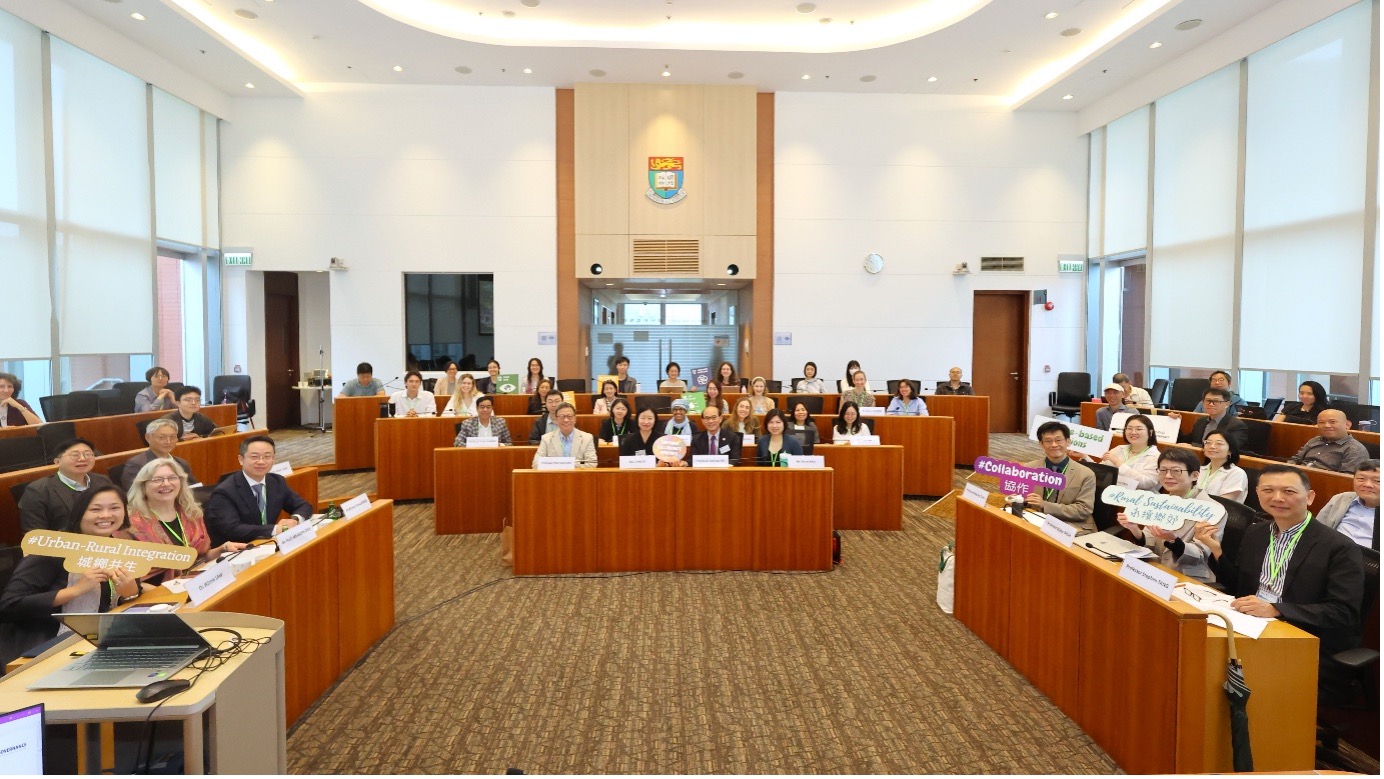
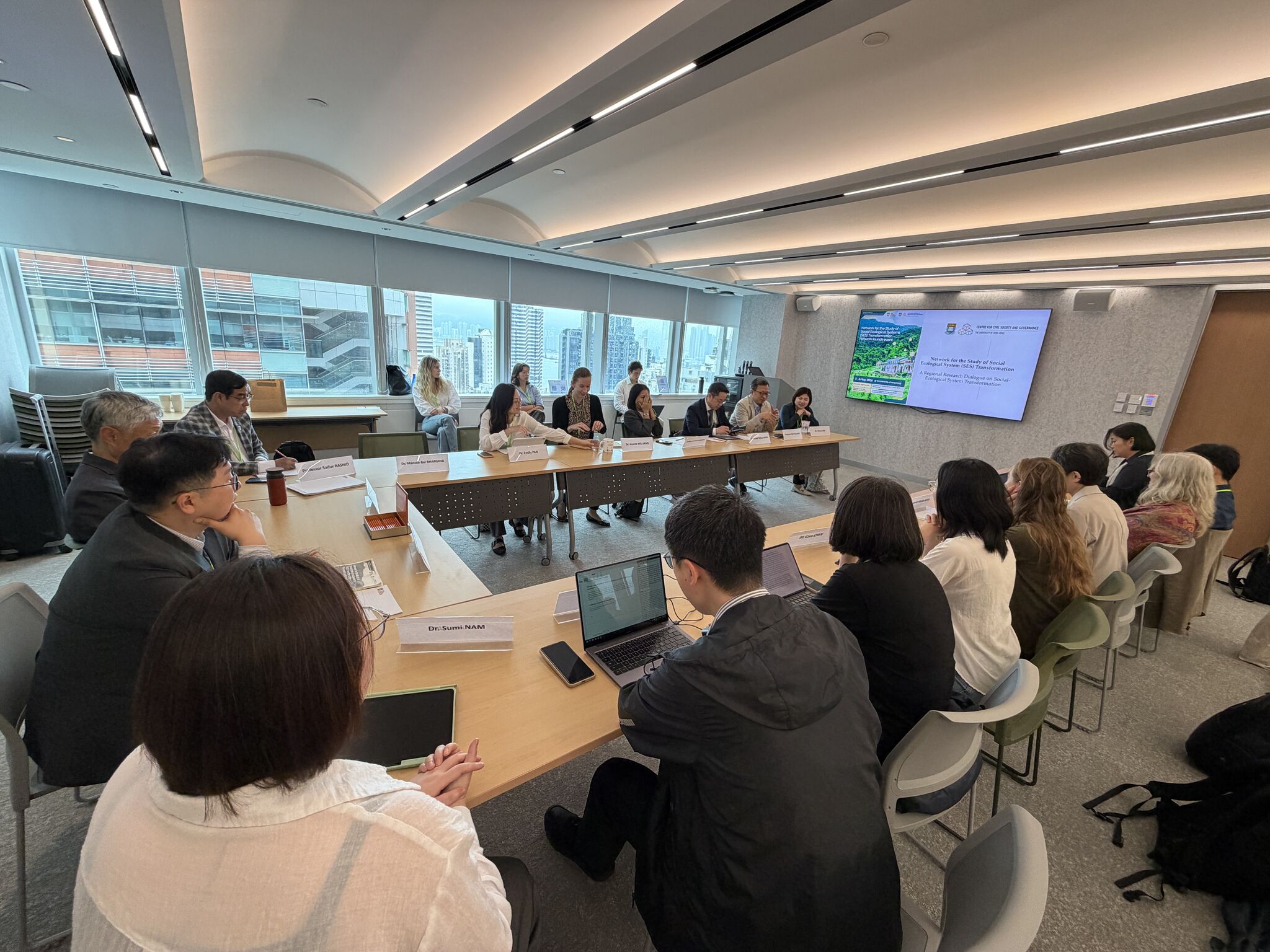
The Network Launch Event was held on 5–6 May 2026 featuring a public dialogue on “Building Resilient Urban-Rural Partnerships” and a “Regional Research Dialogue on Social-Ecological System Transformation”.
Researchers active in studying SES in the APAC region engaged in interactive roundtable discussions, sharing research interests and exploring potential points of collaboration. Key themes emerged around governance, equitable partnerships, leadership, community adaptation, and the influence of knowledge and values on SES transformation.
Throughout the event, several recurring discussions underscored the critical importance of cross-disciplinary collaboration, shared language, and mutual learning in advancing SES research and application. The dialogue provided a valuable platform for fostering connections amongst SES researchers, exchanging insights, and exploring innovative pathways for sustainable transformation in social-ecological systems.
Further collaborations
We are working with colleagues from other regional and international researchers’ and practitioners’ networks to extend and enhance the dissemination of our network members’ research and explore further collaboration opportunities. Our current network partners include:




References
- Baldwin, C., Smith, T., & Jacobson, C. (2017). Love of the land: Social-ecological connectivity of rural landholders. Journal of Rural Studies, 51, 37–52. https://doi.org/10.1016/j.jrurstud.2017.01.012
- Folke, C., Carpenter, S., Elmqvist, T., Gunderson, L., Holling, C. S., & Walker, B. (2002). Resilience and sustainable development: Building adaptive capacity in a world of transformations. Ambio, 31(5), 437–440. https://doi.org/10.1579/0044-7447-31.5.437
- Berkes, F., & Folke, C. (1992). A systems perspective on the interrelations between natural, human-made and cultural capital. Ecological Economics, 5(1), 1–8. https://doi.org/10.1016/0921-8009(92)90017-M
- Folke, C., Hahn, T., Olsson, P., & Norberg, J. (2005). Adaptive governance of social-ecological systems. Annual Review of Environment and Resources, 30(1), 441–473. https://doi.org/10.1146/annurev.energy.30.050504.144511
- Schouten, M. A. H., van der Heide, M. M., & Heijman, W. J. M. (2009). Resilience of social-ecological systems in European rural areas: Theory and prospects. Paper presented at the 113th EAAE Seminar, Belgrade, Republic of Serbia, December 9–11, 2009. https://doi.org/10.22004/ag.econ.57343
- Ambrosio-Albala, M., & Delgado, M. (2008). Understanding rural areas dynamics from a complex perspective: An application of prospective structural analysis. European Association of Agricultural Economists International Congress, August 26–29, Ghent, Belgium. https://doi.org/10.22004/ag.econ.44159
- Ostrom, E. (1990). Governing the commons: The evolution of institutions for collective action. Cambridge University Press.
- Ostrom, E. (1999). Coping with tragedies of the commons. Annual Review of Political Science, 2(1), 493–535. https://doi.org/10.1146/annurev.polisci.2.1.493
- Ansell, C., & Gash, A. (2007). Collaborative governance in theory and practice. Journal of Public Administration Research and Theory, 18(4), 543–571. https://doi.org/10.1093/jopart/mum032
- Carr Kelman, C., Brady, U., Raschke, B. A., & Schoon, M. L. (2023). A systematic review of key factors of effective collaborative governance of social-ecological systems. Society & Natural Resources, 36(11), 1452–1470. https://doi.org/10.1080/08941920.2023.2228234
- Bollier, D. (2007). The growth of the commons paradigm. In C. Hess & E. Ostrom (Eds.), Understanding knowledge as a commons: From theory to practice (pp. 27–40). MIT Press.
- Williams, J. M., Chu, V. H. Y., Lam, W. F., & Law, W. W. Y. (2024). Nested institutions for nested problems: Commoning for rural revitalisation in the peri-urban setting. International Journal of the Commons, 18(1), 456–474. https://doi.org/10.5334/ijc.1266
- Chu, V. H. Y., Lam, W. F., & Williams, J. M. (2023). Building robustness for rural revitalisation: A social-ecological systems perspective. Journal of Rural Studies, 101, 103042. https://doi.org/10.1016/j.jrurstud.2023.103042