


Home » Case 4: Sustainable Rural Revitalisation as an NbS for Tackling Rural Decay and Urban Social Challenges in Hong Kong, China
Nature-based Solutions for Major Societal Challenges
Case 4: Sustainable Rural Revitalisation as an NbS for Tackling Rural Decay and Urban Social Challenges in Hong Kong, China
#Economic and social development #Environmental degradation and biodiversity loss #Human health #Food security #Integrated natural resources management #Agroecology / Regenerative agriculture
Hong Kong is a hustle-and-bustle city. While discussion on sustainable development have largely focused on urban development – such as reducing air and water pollution and developing green building protocols – three-quarters of its land area is rural, where hundreds of villages have been being neglected and left idle amid rapid urbanisation. Lai Chi Wo (LCW) in north-eastern Hong Kong is one of such forgotten villages and was completely depopulated in the 1990s. Surrounded by the Plover Cove Country Park, Yan Chau Tong Marine Park, and Hong Kong UNESCO Geopark, LCW houses diversified habitats, including Fengshui forests, mangroves, freshwater streams, and agricultural wetlands. With the belief that a genuine sustainability agenda for cities should place due importance to maintaining and enhancing its natural and socio-cultural capitals, the Centre for Civil Society and Governance at The University of Hong Kong (HKU-CCSG) initiated the ‘Sustainable Lai Chi Wo’ programme (2013-2017) and the subsequent phase ‘HSBC Rural Sustainability’ programme (2017-2022) (hereafter collectively referred to as the LCW Programme) as a holistic attempt to revitalising villages’ roles and functions for the attainment of a sustainable society. The LCW Programme was a collaboration between the University, local communities as well as a number of non-profits and received support from The Hongkong Bank Foundation. Through revitalisation activities such as farmland revitalisation, ecological conservation, community building, and rural green economy development, LCW’s village community has been rebuilt, the ecosystem services are harnessed and enhanced, and its socio-economic activities are revived.
The LCW Programme was the first initiative of its kind in Hong Kong to revitalise an Indigenous village. The rural revitalisation experience has opened new possibilities for urban-rural partnership in sustainable development. The LCW Programme demonstrates strong adherence to the IUCN Global Standard for Nature-based Solutions (NbS-GS) and serves as an exemplar of how NbS can be used to tackle rural decay and urban social challenges, setting a new urban-rural sustainability agenda for Hong Kong and beyond. Building on the LCW experience, HKU-CCSG continues to carry out rural revitalisation projects with a view to contributing to global sustainable development.
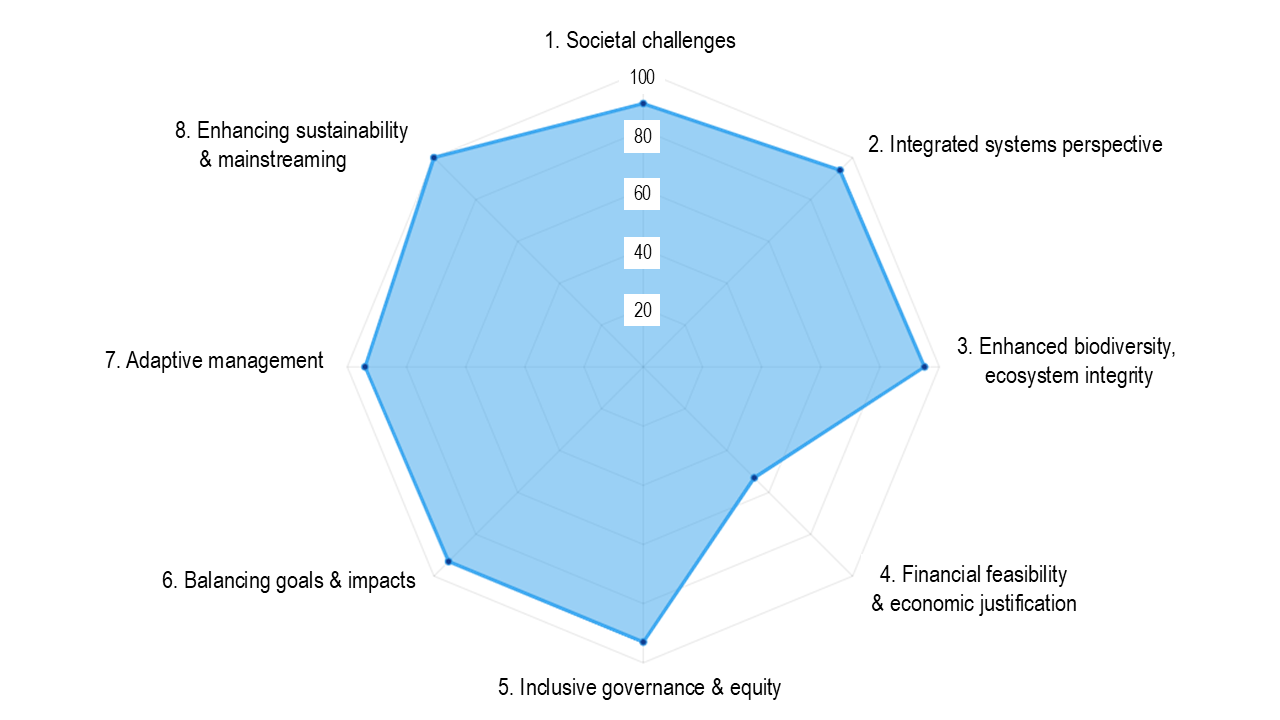
The LCW Programme's NbS self-assessment report can be downloaded here:
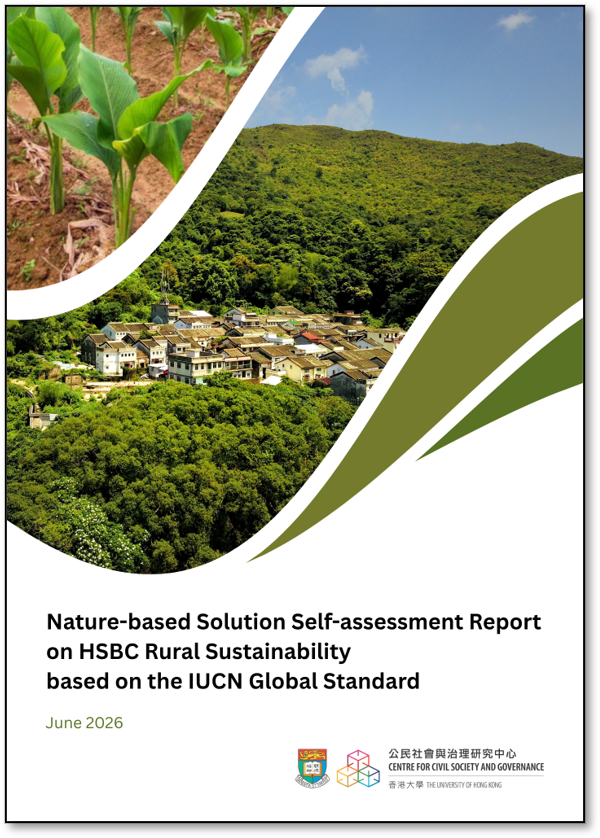
Published in June 2026 (ISBN 978-988-70864-4-4)
Authors: Winnie W. Y. Law, Katie H. L. Chick, Sianna S. I. Yiu, & Jessica M. Williams
[Download the report]
Continue to 'Session 5: ‘Unpacking NbS—Some Reflections'
© 2026 Centre for Civil Society and Governance at The University of Hong Kong
Except where otherwise noted, contents of this e-study is licensed under a Creative Commons Attribution-NonCommercial-ShareAlike 4.0 License.