


Home » Case 3: Hillside Reforestation in the Northern Metropolis, Hong Kong, China
Nature-based Solutions for Major Societal Challenges
Case 3: Hillside Reforestation in the Northern Metropolis, Hong Kong, China
#Climate change #Disaster risk #Environmental degradation and biodiversity loss #Human health #Economic and social development #Water security #Food security #Forest landscape restoration
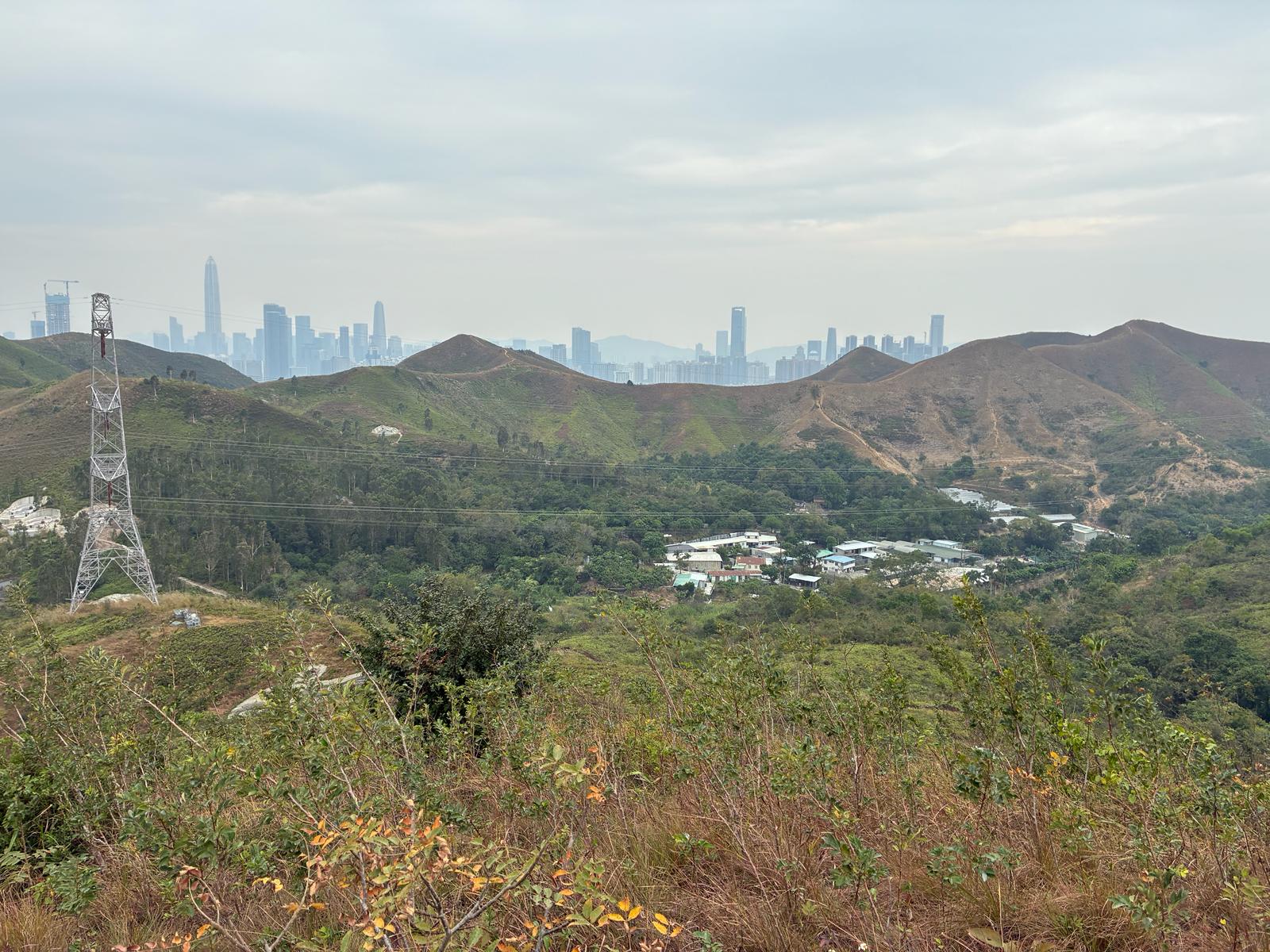
The Northern Metropolis proposed in 2021 is a major land development project in Hong Kong that covers the Yuen Long District and North District with a total area of 30,000 ha. In Hong Kong’s Northern Metropolis, there are extensive hilly areas across the northern New Territories that are not for development and are zoned as green belts or conservation areas. Such areas are mostly degraded land and can provide about 2,000 ha for reforestation (WWF Hong Kong, 2024). To realise this vision of forest restoration in the Northern Metropolis, ecologist Dr Billy Hau, Kadoorie Farm and Botanic Garden (KFBG), HKU-CCSG and individual experts in environmental economics, sustainable finance, etc. formally started a study ‘Restoring Forest Ecological Resilience in Hong Kong – A study for a pilot forest restoration project in the Northern Metropolis Development Area’ in 2025. A pilot reforestation project is expected to be launched upon successful completion of the study. By aligning with the NbS-GS, this reforestation study serves as an excellent example of integrating all eight criteria into the project planning stage. It also demonstrates the need for NbS to be in place for the planning and design of a major development.
NbS-GS Criterion 1: NbS effectively address societal challenges
The Northern Metropolis reforestation initiative aims to address multiple societal challenges (WWF Hong Kong, 2024):
- Climate change mitigation: Extreme hot weather becomes more frequent in Hong Kong under climate change, and urban development causes heat island effect. Hong Kong is committed to achieving carbon neutrality by 2050. Reforestation of the approximately 2,000 ha of hillsides would contribute greatly to carbon sequestration. Reforestation of the extensive network of hills spanning across several districts in the Northern Metropolis can also mitigate the urban heat island effect after canopy formation.
- Disaster risk reduction: Frequent hill hires on some of the hillsides often pose threat to the nearby settlements. Reforestation can contribute to hill fire prevention because closed canopy tropical forests fire-resistant. The forests can also reduce surface runoff and thus prevent flooding and landslides.
- Biodiversity enhancement: The approximately 2,000 ha of hillsides are mostly degraded lands frequently affected by hill fires. Reforestation can reduce hill fires risks, facilitating forest succession and ecosystem restoration, leading to biodiversity enhancement.
- Human health: The is an increasing demand for exploring natural areas among Hong Kong people as well as visitors from Chinese Mainland and overseas. Reforested sites can offer healthy recreation opportunities, such as hiking, to address such demand.
- Economic and social development: Hong Kong is trying to boost its eco-tourism. Reforestation of the degraded hillsides will generate ecotourism opportunities. In addition, A community forestry approach is proposed to engage corporates, villagers, and the public in growing seedlings for sale to reforestation, fostering economic and social development.
- Water conservation and food production: Agriculture and aquaculture still exist in the Northern Metropolis. The reforestation initiative can, to a relatively minor extent, increase clean water supply for them, and increase fruit tree production in the local villages.
After identifying the best pilot project site, the study will carry out a benefit valuation exercise for the selected site.
NbS-GS Criterion 2: NbS incorporate an ecological, economic, social and cultural systems perspective
Recognising that the Northern Metropolis reforestation initiative involves interlinkages and interactions between ecosystem, economy, and society, the study team is deliberately composed of a group of specialists in ecology, urban planning, environmental economics, sustainable finance, and related fields to combine different perspectives and areas of expertise.
As understood from initial stakeholder engagement, there is a strong support for reforestation in Hong Kong. The study and the pilot project aims to demonstrate the viability of reforestation in Hong Kong with resources mobilised from the community, the corporate sector, and the government. The collaborative approach can potentially be applied in other reforestation sites in the Northern Metropolis, and in other parts of Hong Kong, as well as in Southern China (Ribet, 2025).
The study has also considered the potential risks associated with the project. Designated burial grounds will be respected in order to ensure no negative impacts for villagers. Potential impact on grassland species will be explored with concerned NGOs and local stakeholders (Ribet, 2025).
NbS-GS Criterion 3: NbS result in positive change in the state of biodiversity and enhanced ecosystem integrity, including connectivity
Approximately 2,000 ha of hillsides in the Northern Metropolis could potentially be reforested. Such areas were once occupied by primary forests but are now dominated by 1,280 ha of shrubland and 620 ha of grassland according to estimation (Kwong et al., 2022) and are frequently human-induced wildfires, which hinder natural succession.
Reforestation with carefully selected native tree species would restore the degraded habitats, increase ecological resilience and enhance biodiversity. The study will assess the ecosystem attributes before and after reforestation, and quantify the effect of biodiversity enhancement (Ribet, 2025).
NbS-GS Criterion 4: NbS are financially feasible and economically justified
The study for the pilot project will include a Cost-Benefit Analysis to see if the reforestation benefits are greater than the costs. The benefit valuation will include assessment of biodiversity enhancement, carbon sequestration, community benefits, recreational benefits, and existence value. The cost assessment will cover the various components of the pilot project, including reforestation, community engagement; monitoring and reporting; and public relations. The cost estimation and the benefit valuation will also be used for developing an investment case (Ribet, 2025). The study also includes the investigation and development of a finance model that aims to establish a long-term business model for reforestation projects in the Northern Metropolis area.
NbS-GS Criterion 5: NbS are based on inclusive, transparent and empowering governance processes
Regarding the evaluation of community benefits, including cultural, social, educational and recreational values, a participatory evaluation approach will be adopted to actively engage key stakeholders in criteria selection and assessment participation. While the academics in related discipline will propose the initial evaluation framework and approach, local communities’ and stakeholder’s comments will help refine the framework. The engagement process involving the government, private investors, NGOs of concerns/interests and the local community will enable the project team to communicate and discuss the project benefits and impact with the stakeholders at an early stage and help align project outcomes with community needs and aspirations (Ribet, 2025).
NbS-GS Criterion 6: NbS seek to equitably reconcile the achievement of their primary goal(s) with any intended and unintended impacts on the continued provision of multiple benefits
While some exotic tree species sequester carbon at faster rates than native species, they may lead to the spread of invasive species, cause excessive consumption of soil nutrients and groundwater, and increase fire risk. Suitable native tree species, including those found in Fengshui forests, will be selected for reforestation in order to enhance biodiversity and maximise carbon storage. Regarding the potential adverse impact on grassland bird species, the project team will discuss the conservation of such species in Hong Kong with concerned NGOs. To respect the rights of Indigenous villagers, the project will make sure that designated burial grounds on the hillsides will not be impacted (Ribet, 2025).
NbS-GS Criterion 7: NbS are managed adaptively, based on evidence
From the start of the pilot project, the reforestation benefits will be regularly monitored against the initial targets and will be documented in reports. Results will be communicated with stakeholders to keep them updated with the project progress. Stakeholder feedback will be collected through engagement activities and necessary adjustments will be made to the project accordingly.
NbS-GS Criterion 8: NbS contribute to the enhancement of the enabling conditions for their implementation, sustainability and mainstreaming
The Northern Metropolis reforestation initiative aligns with the China National Biodiversity Strategy and Action Plan (2023-2030) and can contribute to the Kunming-Montreal Global Biodiversity Framework targets for 2030. It is complementary with the New Territories North Urban-Rural Greenway proposed in the Northern Metropolis Development Strategy (The Government of the Hong Kong Special Administrative Region of the People’s Republic of China, 2021) and can contribute to achieving Hong Kong’s target of carbon neutrality by 2050 (Environment Bureau, The Government of the Hong Kong Special Administrative Region of the People’s Republic of China, 2021).
The study team envisioned that the pilot reforestation project would be scaled up to other suitable reforestation sites in the Northern Metropolis, contributing to the following Priority Action and Overall Targets of the Hong Kong Biodiversity Strategy and Action Plan 2035 (BSAP 2035):
- Priority Action 1.4 ‘Enhance existing ecosystems and restore degraded habitats or declined biological resources’
- Overall Target 3 ‘Enhanced and widely mobilised societal efforts in habitat restoration’
- Overall Target 8 ‘Widely adopted naturebased solutions and upgraded urban bluegreen spaces’
- Overall Target 9 ‘Enhanced public knowledge of biodiversity, raised awareness and boosted community participation’
Moreover, the reforestation sites can potentially be designated as Forest Parks in the future to match with the Forest Park system in Chinese Mainland. It would deepen Hong Kong’s integration with the Greater Bay Area as there are many Forest Parks in Shenzhen and other cities in the Greater Bay Area (WWF Hong Kong, 2024).
© 2026 Centre for Civil Society and Governance at The University of Hong Kong
Except where otherwise noted, contents of this e-study is licensed under a Creative Commons Attribution-NonCommercial-ShareAlike 4.0 License.